
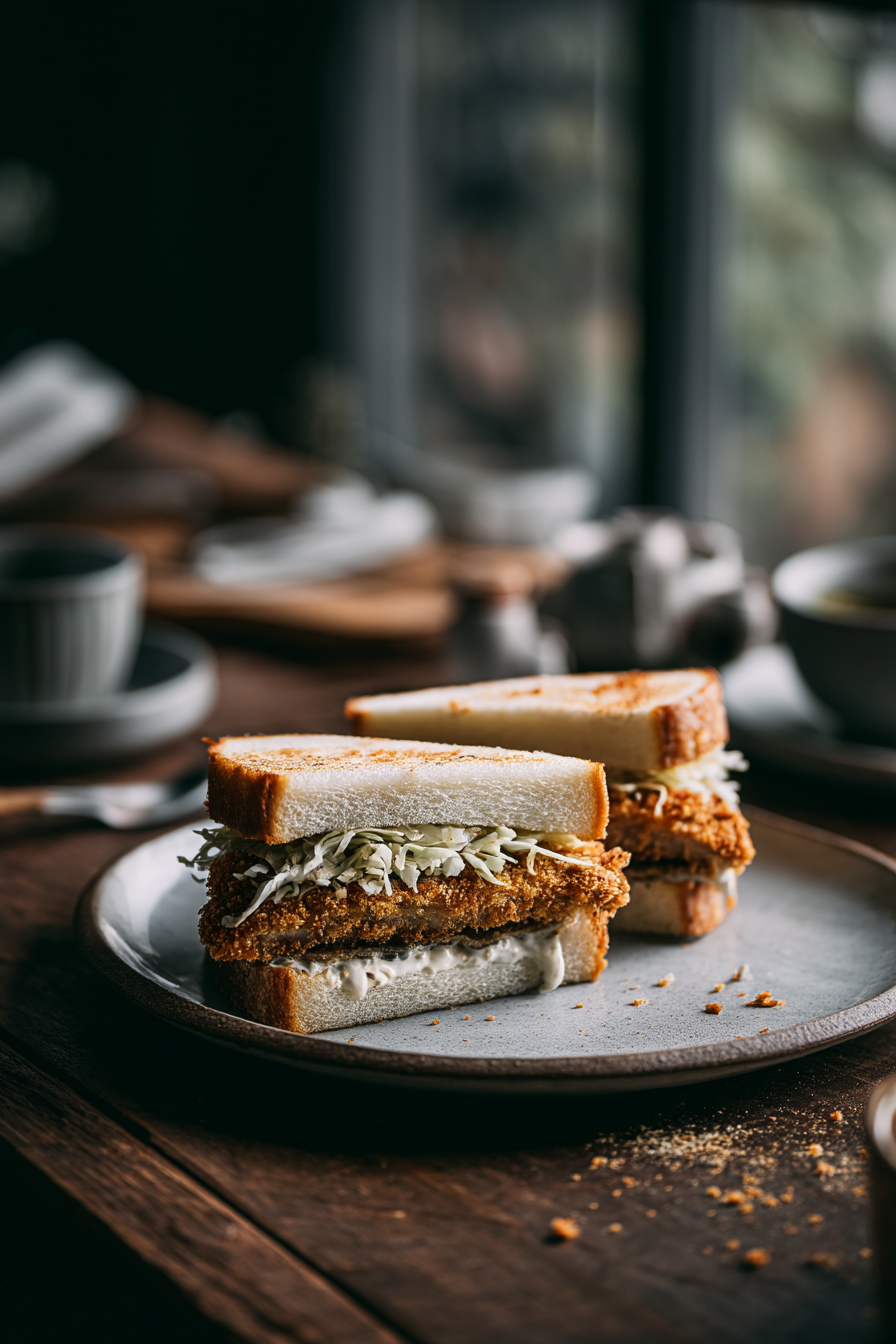
These Crispy Eggplant Katsu Sandwiches are packed with ultra crunchy golden panko-crusted Japanese eggplant, soft fluffy milk bread, tangy cabbage slaw, creamy Japanese mayo, and savory tonkatsu sauce. Inspired by classic Japanese katsu sando, this vegetarian sandwich delivers the perfect balance of crispy texture, creamy eggplant, and rich umami flavor in every bite.
If you love crispy comfort food with a restaurant-quality texture, this eggplant katsu sandwich recipe is guaranteed to become a favorite. The toasted panko coating stays incredibly crunchy while the Japanese eggplant turns silky and tender inside, creating an authentic café-style sandwich that tastes both indulgent and fresh.
🍆 Why You’ll Love These Crispy Eggplant Katsu Sandwiches
Ultra Crispy Panko Coating
These crispy eggplant katsu sandwiches are coated in golden panko breadcrumbs for a light, crunchy texture that makes every bite satisfying.
Creamy Japanese Eggplant Center
Japanese eggplant becomes silky and tender inside the crispy coating, giving this vegetarian katsu sandwich a rich, almost buttery texture.
Japanese-Inspired Comfort Food
Soft milk bread, tangy cabbage slaw, creamy Japanese mayo, and savory tonkatsu sauce make this eggplant katsu sando taste like cozy café-style comfort food.
A Flavorful Vegetarian Sandwich
This recipe is perfect when you want a hearty vegetarian sandwich that still feels crispy, savory, filling, and packed with umami flavor.
🛒 Ingredient Notes for Crispy Eggplant Katsu Sandwiches
Japanese Eggplant
Japanese eggplant works best for these crispy eggplant katsu sandwiches because it has a creamier texture and less moisture than large globe eggplant. This helps the eggplant become silky inside while staying crispy outside.
Panko Breadcrumbs
Panko breadcrumbs create the signature light and crunchy coating that makes eggplant katsu sandwiches so satisfying. Toasting the panko before frying gives the coating even more crispiness and a deeper golden color.
Shokupan or Milk Bread
Soft Japanese milk bread, also called shokupan, gives this eggplant katsu sando its authentic café-style texture. The fluffy bread gently compresses around the crispy filling without becoming too hard or chewy.
Japanese Mayo
Japanese mayo adds rich creamy flavor and balances the crispy fried eggplant beautifully. Kewpie mayo is especially delicious because of its slightly tangy umami flavor.
Tonkatsu Sauce
Tonkatsu sauce adds sweet savory flavor that pairs perfectly with the crispy panko coating and creamy eggplant interior. A light drizzle keeps the sandwich balanced without becoming soggy.
Finely Shredded Cabbage
Thinly shredded cabbage adds freshness and crunch that balances the richness of the fried eggplant. Lightly seasoning the cabbage helps soften it slightly while keeping the texture crisp.
Dijon Mustard and Soy Sauce
A small amount of Dijon mustard and soy sauce in the egg mixture adds extra savory depth and helps create a more flavorful crispy coating without overpowering the sandwich.
🍆 How to Make Crispy Eggplant Katsu Sando
Prepare the Eggplant
Slice the Japanese eggplant lengthwise into thin planks slightly under 1/3 inch thick. Season with kosher salt, garlic powder, and white pepper, then let the eggplant rest for 15 minutes. Pat the slices very dry with paper towels and let them air dry for another 5 minutes so the crispy panko coating sticks properly.
Make the Cabbage Slaw
In a small bowl, combine finely shredded cabbage, rice vinegar, Japanese mayo, sugar, and a small pinch of salt. Let the slaw sit for 5 minutes, then lightly blot away excess moisture. This keeps the eggplant katsu sando fresh and crunchy without making the bread soggy.
Toast the Panko Breadcrumbs
Add the panko breadcrumbs to a dry skillet over medium-low heat. Toast for 2 to 3 minutes, stirring often, until lightly golden. Let the panko cool completely before breading the eggplant. Toasting the panko helps the eggplant katsu become extra crispy and evenly golden.
Bread the Eggplant
Set up three shallow bowls. In the first bowl, combine flour and cornstarch. In the second bowl, whisk together eggs, milk, Dijon mustard, and soy sauce. Add the toasted panko to the third bowl. Coat each eggplant slice lightly in the flour mixture, dip into the egg mixture, then press gently into the panko breadcrumbs.
Fry Until Crispy
Heat 1/2 inch of neutral oil in a skillet to 350°F. Fry the breaded eggplant for 90 seconds to 2 minutes per side, or until deeply golden brown and crispy. Transfer the crispy eggplant katsu to a wire rack so steam can escape and the coating stays crunchy.
Toast the Milk Bread
Lightly butter the shokupan or soft milk bread and toast just until barely golden. Keep the bread soft and fluffy rather than crunchy so the sandwich has the classic Japanese katsu sando texture.
Assemble the Eggplant Katsu Sando
Spread a thin layer of Japanese mayo onto the bread. Add the cabbage slaw, crispy eggplant katsu, and a light drizzle of tonkatsu sauce. Top with the remaining bread, press gently, and slice in half. Serve immediately with lemon wedges for the best crispy texture.
⭐ Pro Tips for Crispy Eggplant Katsu Sandwiches
Use Japanese Eggplant for the Best Texture
Japanese eggplant has thinner skin, fewer seeds, and a creamier interior than large globe eggplant. It fries beautifully and gives these crispy eggplant katsu sandwiches a silky center with less moisture.
Pat the Eggplant Very Dry
Moisture is the biggest reason breading slips or turns soggy. After salting the eggplant, pat each slice thoroughly dry and let it air dry briefly before breading.
Toast the Panko First
Toasting the panko breadcrumbs before frying gives the eggplant katsu a deeper golden color and extra crunch. It also helps the coating crisp quickly before the eggplant becomes too soft.
Keep the Oil at 350°F
For the crispiest eggplant katsu sando, keep the frying oil close to 350°F. If the oil is too cool, the panko coating can absorb excess oil and taste greasy.
Use a Wire Rack After Frying
Place the fried eggplant on a wire rack instead of paper towels. This allows steam to escape and keeps the crispy panko coating from softening underneath.
Keep the Bread Soft
Japanese katsu sando should have soft, fluffy bread. Toast the milk bread only lightly so it stays tender and gently compresses around the crispy eggplant filling.
Assemble Right Before Serving
These crispy eggplant katsu sandwiches taste best immediately after assembly. Waiting too long can soften the panko crust because of the tonkatsu sauce, mayo, and cabbage slaw.
🍽️ Variations for Crispy Eggplant Katsu Sandwiches
Spicy Eggplant Katsu Sando
Add chili crisp, sriracha, or togarashi to the Japanese mayo for a spicy eggplant katsu sando with extra heat and savory flavor.
Miso Mayo Eggplant Katsu Sandwich
Mix a small spoonful of white miso into the Japanese mayo for a deeper umami flavor that pairs beautifully with crispy panko-coated eggplant.
Pickled Cucumber Eggplant Katsu Sandwich
Add thin pickled cucumber ribbons for a fresh, tangy crunch that balances the richness of the fried eggplant and tonkatsu sauce.
Cheesy Eggplant Katsu Sandwich
Add a thin slice of provolone, mozzarella, or mild cheddar while the eggplant is still warm for a melty vegetarian katsu sandwich.
Avocado Eggplant Katsu Sando
Layer thin avocado slices into the sandwich for extra creaminess and a richer café-style eggplant katsu sando.
Furikake Eggplant Katsu Sandwich
Sprinkle furikake over the cabbage slaw or crispy eggplant for extra savory Japanese-inspired flavor and a beautiful finishing touch.
🧊 Storage and Make Ahead Tips for Crispy Eggplant Katsu Sandwiches
Best Served Fresh
These crispy eggplant katsu sandwiches taste best immediately after assembly while the panko coating is still crunchy and the milk bread stays soft and fluffy.
How to Store Fried Eggplant
Store leftover fried eggplant katsu in an airtight container in the refrigerator for up to 3 days. Place paper towels underneath the eggplant to help absorb excess moisture and keep the coating from becoming soggy.
How to Reheat Eggplant Katsu
Reheat the crispy eggplant in a 375°F oven or air fryer for several minutes until hot and crunchy again. Avoid microwaving because it softens the crispy panko coating.
Make the Slaw Ahead of Time
The cabbage slaw can be prepared several hours ahead and stored in the refrigerator. Lightly blot excess moisture before assembling the sandwiches for the best texture.
Prep the Breading Station Early
You can prepare the flour mixture, egg mixture, and toasted panko breadcrumbs ahead of time to make assembly faster when ready to cook.
Do Not Assemble Ahead
For the crispiest eggplant katsu sando, avoid assembling the sandwiches too early. The tonkatsu sauce and cabbage slaw can soften the bread and crispy coating over time.
❓ Crispy Eggplant Katsu Sandwiches FAQ
Can I use regular eggplant instead of Japanese eggplant?
Yes, you can use regular globe eggplant, but Japanese eggplant is best for crispy eggplant katsu sandwiches because it has a creamier texture, thinner skin, and less moisture. If using globe eggplant, slice it thinly and pat it very dry before breading.
How do I keep eggplant katsu crispy?
To keep eggplant katsu crispy, toast the panko before breading, fry at 350°F, and place the fried eggplant on a wire rack instead of paper towels. Assemble the sandwich right before serving for the best crunch.
Can I make eggplant katsu sandwiches ahead of time?
These eggplant katsu sandwiches are best served fresh. You can prep the slaw, sauce, and breading ingredients ahead of time, but wait to fry and assemble the sandwiches until just before serving.
What bread is best for eggplant katsu sando?
Soft Japanese milk bread, also called shokupan, is the best bread for eggplant katsu sando. It stays fluffy and tender while gently compressing around the crispy eggplant filling.
Can I bake the eggplant instead of frying it?
You can bake the breaded eggplant, but the texture will not be as crispy as fried eggplant katsu. For the best baked version, spray the breaded eggplant generously with oil and bake at 425°F until golden and crisp.
What sauce goes on eggplant katsu sandwiches?
Tonkatsu sauce is the classic choice for eggplant katsu sandwiches. It adds sweet, savory, tangy flavor that pairs perfectly with crispy panko-coated eggplant, cabbage slaw, and Japanese mayo.
Why is my eggplant katsu soggy?
Eggplant katsu can become soggy if the eggplant is too wet, the oil is not hot enough, or the fried pieces are placed directly on paper towels. Pat the eggplant dry, fry at 350°F, and cool on a wire rack for the crispiest texture.
Is this eggplant katsu sandwich vegetarian?
Yes, this crispy eggplant katsu sandwich is vegetarian as long as your tonkatsu sauce and Japanese mayo are vegetarian-friendly. Always check labels if needed.

Crispy Eggplant Katsu Sandwiches
Equipment
- Large skillet or frying pan
- wire cooling rack
- Mixing bowls
- Shallow breading bowls
- Tongs
- Whisk
- knife
- Cutting board
- paper towels
- Measuring cups and spoons
- Thermometer recommended for frying oil
- Spatula or slotted spoon
Ingredients
For the Eggplant Katsu
- 2 medium Japanese eggplants
- 1 teaspoon kosher salt
- 1/2 teaspoon garlic powder
- 1/4 teaspoon white pepper
- 1/3 cup all-purpose flour
- 2 tablespoons cornstarch
- 2 large eggs
- 1 tablespoon milk
- 1 teaspoon Dijon mustard
- 1/2 teaspoon soy sauce
- 1 1/4 cups panko breadcrumbs
- Neutral frying oil as needed
For the Slaw
- 3/4 cup very finely shredded green cabbage
- 1 teaspoon rice vinegar
- 1 teaspoon Japanese mayo
- 1/2 teaspoon sugar
- Small pinch kosher salt
For Assembly
- 4 slices soft Japanese milk bread or shokupan
- Softened butter for toasting
- 1 1/2 tablespoons Japanese mayo
- 1 tablespoon tonkatsu sauce
- Lemon wedges for serving
Instructions
Prepare the Eggplant
- Slice the Japanese eggplants lengthwise into thin planks slightly under 1/3 inch thick.
- Season with kosher salt, garlic powder, and white pepper. Let sit for 15 minutes.
- Pat extremely dry with paper towels, then let air dry for another 5 minutes.
Prepare the Slaw
- In a bowl, combine cabbage, rice vinegar, Japanese mayo, sugar, and kosher salt.
- Mix gently and let sit for 5 minutes.
- Lightly blot excess moisture with paper towels before assembling sandwiches.
Toast the Panko
- Place panko breadcrumbs in a dry skillet over medium-low heat.
- Toast for 2–3 minutes until lightly golden.
- Transfer to a bowl and let cool completely.
Bread the Eggplant
- In one bowl, whisk together flour and cornstarch.
- In another bowl, whisk together eggs, milk, Dijon mustard, and soy sauce.
- Place toasted panko in a third bowl.
- Coat eggplant lightly in flour mixture, then egg mixture, then panko breadcrumbs.
- Rest breaded eggplant for 5 minutes before frying.
Fry the Eggplant
- Heat 1/2 inch of neutral oil in a skillet to 350°F.
- Fry eggplant for 90 seconds to 2 minutes per side until deeply golden brown and crispy.
- Transfer to a wire rack immediately.
- Lightly season with a very small pinch of salt while hot if needed.
Toast the Bread
- Lightly butter the milk bread and toast until barely golden.
- The bread should remain soft and tender.
- Allow bread to cool for 1 minute before assembling.
Assemble the Sandwiches
- Spread Japanese mayo onto one side of the bread.
- Add cabbage slaw, crispy eggplant, and a light drizzle of tonkatsu sauce.
- Top with remaining bread slices and gently press together.
- Slice in half and serve immediately with lemon wedges.
Notes
Choosing the Best Eggplant
Japanese eggplant is the best choice for these crispy eggplant katsu sandwiches because it has a creamier texture and less moisture than large globe eggplant. The thinner shape also creates a better ratio of crispy coating to soft interior. If using globe eggplant, slice it very thinly and pat it extra dry before breading to help prevent sogginess.Why Toasting the Panko Matters
Toasting the panko breadcrumbs before frying gives the eggplant katsu a deeper golden color and an extra crispy texture without overcooking the eggplant itself. This small step helps the coating stay crunchier longer and creates a more restaurant-style finish.Oil Temperature Tips
Keeping the oil temperature close to 350°F is important for preventing greasy breading. If the oil temperature drops too low, the coating can absorb excess oil and lose its crunch. Fry the eggplant in batches and avoid overcrowding the pan for the crispiest results.Keeping the Coating Crispy
After frying, place the eggplant on a wire rack instead of paper towels. A wire rack allows steam to escape so the crispy coating stays crunchy longer. Letting the fried eggplant rest briefly before assembling also helps reduce trapped steam inside the sandwich.Best Bread for Katsu Sando
Shokupan or Japanese milk bread creates the most authentic eggplant katsu sando texture because the bread stays soft and fluffy while gently compressing around the crispy filling. Avoid overly crusty bread since it can overpower the delicate crispy eggplant texture.Serving Tips
For the crispiest sandwich texture, assemble the sandwiches immediately before serving. The tonkatsu sauce and cabbage slaw can soften the bread over time if the sandwiches sit too long. A squeeze of fresh lemon right before serving brightens the rich fried coating and balances the savory umami flavors beautifully.Optional Flavor Upgrades
For even more flavor, try adding:- Furikake seasoning
- Chili crisp
- Miso kewpie mayo
- Thin pickled cucumber ribbons
- Togarashi seasoning
- Black sesame seeds
🍱 More Japanese-Inspired Recipes You’ll Love
If you love these crispy eggplant katsu sandwiches, here are a few more cozy Japanese-inspired recipes from Sugar Cloud Baking that pair perfectly with this crispy vegetarian katsu sando.
- Japanese Sukiyaki Hot Pot — A rich and comforting Japanese hot pot filled with savory broth, vegetables, and classic sukiyaki flavors.
- Melon Cream Soda Japanese Melon Soda Float — A fun and nostalgic Japanese café-style drink with creamy vanilla ice cream and vibrant melon soda.
- Japanese Melon Tiramisu — A light and creamy Japanese-inspired dessert layered with fresh melon flavor and fluffy mascarpone filling.
- Japanese Teriyaki Pineapple Burger — A sweet savory burger packed with teriyaki glaze, juicy pineapple, and Japanese-inspired flavors.
- Crab Miso Ramen — A rich umami-packed ramen recipe with creamy miso broth and tender crab for the ultimate comforting bowl.
Leave a Reply