
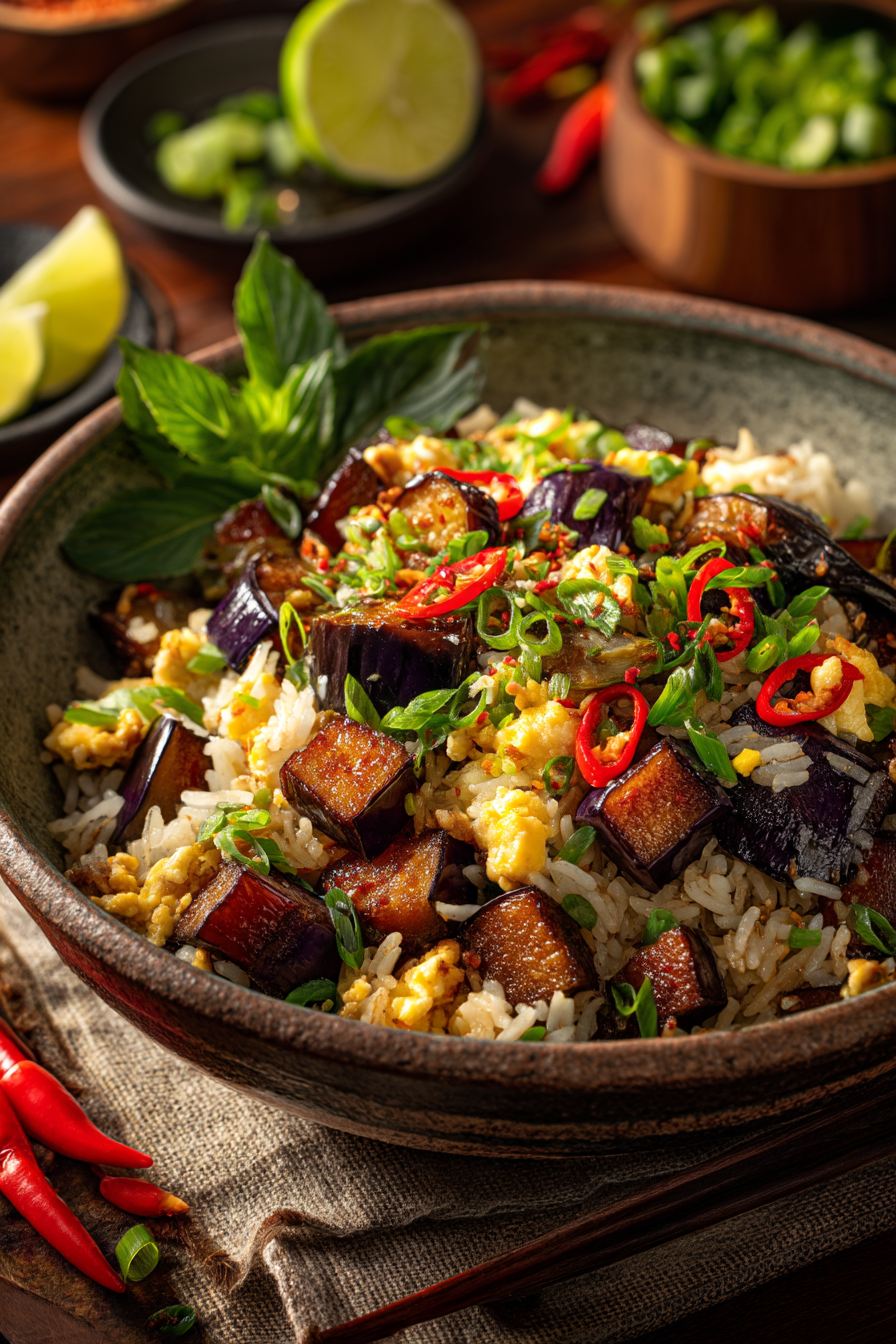
This Thai basil eggplant fried rice is packed with smoky wok-fried jasmine rice, caramelized Japanese eggplant, garlic, Thai chilies, scrambled eggs, and fragrant Thai basil for a bold and satisfying meal inspired by Thai street food. Every bite is savory, aromatic, slightly spicy, and loaded with rich umami flavor while still feeling light and fresh.
The silky eggplant absorbs the flavorful sauce beautifully while the fresh Thai basil adds a bright peppery finish that makes this fried rice taste restaurant-quality. Perfect for weeknight dinners, meal prep, or using leftover rice, this easy Thai-inspired fried rice recipe comes together quickly with simple ingredients and authentic flavor.
🍆 Why You’ll Love This Thai Basil Eggplant Fried Rice
Bold Thai-Inspired Flavor
This Thai basil eggplant fried rice is savory, aromatic, lightly spicy, and packed with fresh basil flavor. Garlic, shallots, Thai chilies, oyster sauce, fish sauce, and white pepper create a rich restaurant-style fried rice taste at home.
Perfect Use for Leftover Rice
Cold day-old jasmine rice fries beautifully and gives this eggplant fried rice its fluffy texture with lightly crisped edges. It is a great way to turn leftover rice into a flavorful weeknight dinner.
Silky Caramelized Eggplant
Japanese eggplant becomes creamy, rich, and lightly smoky as it browns in the wok. It soaks up the savory sauce while adding a soft, satisfying texture to every bite.
Fresh Thai Basil Aroma
Thai basil gives this fried rice its signature peppery, fragrant finish. Adding it at the end keeps the flavor bright, fresh, and bold.
Easy to Customize
This Thai basil fried rice can be served as a vegetarian-friendly main dish or customized with crispy tofu, shrimp, chicken, or extra vegetables for a heartier meal.
🍆 Ingredients Notes for Thai Basil Eggplant Fried Rice
Cold Jasmine Rice
Cold day-old jasmine rice is best for Thai basil eggplant fried rice because the grains are drier and separate more easily in the wok. Freshly cooked rice can release too much moisture and make the fried rice soft instead of lightly crisped.
Japanese Eggplant
Japanese eggplant has thin skin, a tender texture, and a naturally mild flavor that works beautifully in eggplant fried rice. It caramelizes quickly and becomes silky without turning tough or bitter.
Thai Basil
Thai basil gives this fried rice its bold, peppery, slightly anise-like aroma. Add it at the very end so the leaves stay fragrant, vibrant, and fresh instead of overcooked.
Garlic, Shallots, and Thai Chilies
Garlic, shallots, and Thai chilies create the aromatic base for this Thai fried rice recipe. The shallots add gentle sweetness, the garlic adds savory depth, and the chilies bring fresh heat.
Eggs
Soft scrambled eggs add richness and protein to the fried rice. Cook them briefly and return them near the end so they stay tender instead of rubbery.
Savory Sauce
The sauce combines oyster sauce, light soy sauce, fish sauce, dark soy sauce, brown sugar, white pepper, and a little water. This creates a balanced Thai-inspired fried rice flavor that is savory, lightly sweet, aromatic, and full of umami without making the rice soggy.
Lime Wedges
Fresh lime wedges brighten the rich eggplant and savory fried rice. A quick squeeze before serving adds freshness and helps balance the salty, spicy, and umami flavors.
🍚 How to Make Thai Basil Eggplant Fried Rice
Prepare the Eggplant
Lightly salt the diced Japanese eggplant and let it sit for about 10 minutes. Pat it completely dry with paper towels before cooking. This helps remove excess moisture so the eggplant browns instead of steaming.
Brown the Eggplant
Heat neutral oil in a large wok or skillet over medium-high to high heat. Add the eggplant in a single layer and cook until deeply golden, silky, and lightly charred around the edges. Stir only occasionally so the eggplant has time to caramelize.
Scramble the Eggs
Push the eggplant onto a plate, then softly scramble the beaten eggs in the same pan. Remove the eggs while they are still tender and slightly glossy so they do not overcook later.
Cook the Aromatics
Add the sliced shallots to the hot pan and cook briefly until slightly softened. Stir in the garlic and Thai chilies and cook just until fragrant. This builds the savory, spicy base for the Thai basil eggplant fried rice.
Fry the Rice
Add cold jasmine rice to the wok and break apart any clumps. Cook over high heat, spreading the rice across the pan before tossing, until the grains are dry, separated, and lightly crisped in spots.
Add the Sauce
Whisk together the oyster sauce, light soy sauce, fish sauce, dark soy sauce, brown sugar, white pepper, MSG if using, and water. Pour the sauce around the edge of the wok and toss quickly so the rice becomes lightly glossy without turning wet.
Finish with Eggplant, Eggs, and Basil
Return the caramelized eggplant, soft scrambled eggs, and green onions to the pan. Toss briefly, then turn off the heat and fold in the Thai basil until just wilted. Adding the basil at the end keeps the fried rice fresh, aromatic, and vibrant.
Serve Immediately
Serve this Thai basil eggplant fried rice hot with fresh lime wedges on the side. A squeeze of lime brightens the smoky rice, silky eggplant, and savory Thai-inspired sauce.
🔥 Pro Tips for the Best Thai Basil Eggplant Fried Rice
Use Day-Old Rice
Cold day-old jasmine rice creates the best fried rice texture because the grains stay separate and crisp slightly in the wok. Fresh rice contains too much moisture and can become soft or sticky.
Do Not Overcrowd the Pan
Overcrowding traps steam and prevents proper caramelization. Cook the eggplant in a single layer and fry the rice over high heat so everything develops smoky wok-fried flavor.
Brown the Eggplant Thoroughly
Allow the Japanese eggplant to develop deep golden brown edges before stirring too often. Proper caramelization gives the fried rice richer flavor and prevents the eggplant from tasting watery.
Add Thai Basil at the End
Thai basil should be folded into the fried rice after turning off the heat. This keeps the basil fragrant, vibrant, and fresh instead of dull or overcooked.
Use High Heat for Authentic Fried Rice
Cooking over high heat helps dry the rice slightly while creating lightly crispy edges and restaurant-style wok flavor. A hot wok or skillet is essential for the best Thai basil fried rice.
Mix the Sauce Before Cooking
Whisking the sauce ingredients together before adding them to the wok helps the seasonings distribute evenly throughout the rice without overmixing.
Finish with Fresh Lime
A squeeze of fresh lime juice right before serving brightens the savory eggplant fried rice and balances the rich umami flavors beautifully.
🌿 Variations for Thai Basil Eggplant Fried Rice
Spicy Thai Basil Fried Rice
Add extra Thai chilies or a spoonful of chili crisp for a hotter version with bold spicy flavor and extra heat throughout the fried rice.
Tofu Thai Basil Fried Rice
Add crispy pan-fried tofu cubes for a hearty vegetarian protein option that pairs perfectly with the caramelized eggplant and savory Thai-inspired sauce.
Chicken Thai Basil Fried Rice
Stir in sliced chicken thighs or shredded rotisserie chicken for a more filling version that still keeps the fresh basil flavor front and center.
Shrimp Eggplant Fried Rice
Add quickly sautéed shrimp for a seafood-inspired variation with sweet savory flavor that works beautifully with Thai basil and garlic.
Mushroom Eggplant Fried Rice
Add sliced shiitake mushrooms or cremini mushrooms for extra umami flavor and a meatier texture that complements the silky Japanese eggplant.
Extra Vegetable Fried Rice
Mix in vegetables like bell peppers, snap peas, carrots, baby corn, or broccoli for a colorful and nutrient-packed fried rice variation.
Vegan Thai Basil Fried Rice
Skip the eggs and replace the oyster sauce and fish sauce with vegetarian mushroom sauce and soy sauce for a fully vegan version with rich savory flavor.
Pineapple Thai Fried Rice
Add diced pineapple for a sweet savory tropical twist that balances the smoky rice, spicy chilies, and fragrant Thai basil beautifully.
🥡 Storage and Make Ahead Tips for Thai Basil Eggplant Fried Rice
How to Store Leftovers
Store leftover Thai basil eggplant fried rice in an airtight container in the refrigerator for up to 4 days. The flavors continue developing as the rice sits, making leftovers especially delicious the next day.
Best Way to Reheat Fried Rice
Reheat the fried rice in a hot skillet or wok over medium-high heat for the best texture. Stir frequently until heated through. This helps bring back the lightly crisped edges and prevents the rice from becoming soggy.
Microwave Reheating Option
You can also reheat Thai basil fried rice in the microwave in short intervals, stirring between each interval for even heating. Add a tiny splash of water if the rice seems dry.
Make the Rice Ahead of Time
Cooking the jasmine rice a day ahead actually improves the final fried rice texture. Spread the cooked rice on a sheet pan or large plate and refrigerate uncovered so the grains dry slightly before frying.
Prep Ingredients in Advance
The eggplant, garlic, shallots, green onions, and Thai chilies can all be sliced ahead of time and stored in the refrigerator until ready to cook. Having everything prepped before starting makes wok cooking much easier.
Do Not Add Basil Too Early
For the freshest flavor, wait to add the Thai basil until the very end of cooking. This keeps the basil aromatic, vibrant, and bright even when reheating leftovers later.
Can You Freeze Fried Rice?
Yes, this eggplant fried rice can be frozen for up to 2 months. Let the fried rice cool completely before transferring to freezer-safe containers. Thaw overnight in the refrigerator before reheating.
❓ Frequently Asked Questions About Thai Basil Eggplant Fried Rice
What Type of Eggplant Is Best for Fried Rice?
Japanese eggplant is best for Thai basil eggplant fried rice because it has thin skin, fewer seeds, and a creamy texture that caramelizes beautifully without becoming bitter or mushy.
Can I Use Fresh Rice Instead of Day-Old Rice?
Day-old jasmine rice works best because it is drier and fries more easily. Fresh rice contains too much moisture and may become soft or sticky instead of developing lightly crisped edges.
What Does Thai Basil Taste Like?
Thai basil has a bold peppery flavor with slight hints of anise or licorice. It tastes more aromatic and savory than Italian basil and gives this fried rice its signature Thai-inspired flavor.
Is Thai Basil Eggplant Fried Rice Spicy?
This fried rice has mild to moderate heat depending on how many Thai chilies you use. You can easily make it milder or spicier by adjusting the chili amount.
Can I Make This Fried Rice Vegetarian?
Yes. Replace the fish sauce and oyster sauce with vegetarian mushroom sauce or soy sauce and skip the eggs if needed for a fully vegetarian or vegan version.
Why Is My Fried Rice Soggy?
Soggy fried rice is usually caused by using freshly cooked rice, overcrowding the pan, or cooking over low heat. Cold rice and high heat are important for proper fried rice texture.
Can I Add Protein to This Recipe?
Absolutely. Chicken, shrimp, crispy tofu, pork, or beef all work well with the savory Thai basil and caramelized eggplant flavors.
How Long Does Thai Basil Eggplant Fried Rice Last?
Stored properly in an airtight container, this fried rice will stay fresh in the refrigerator for up to 4 days.

Thai Basil Eggplant Fried Rice
Equipment
- Large wok or large skillet
- Cutting board
- Sharp knife
- Mixing bowls
- Wooden spoon or wok spatula
- Measuring spoons
- measuring cups
- paper towels
- Small sauce bowl
Ingredients
Fried Rice
- 3 1/2 cups cold cooked jasmine rice preferably day-old
- 1 medium Japanese eggplant diced into small cubes
- 2 tablespoons neutral oil divided
- 2 small shallots thinly sliced
- 4 garlic cloves finely minced
- 1–2 Thai chilies thinly sliced
- 2 eggs lightly beaten
- 3 green onions sliced
- 1 large packed cup Thai basil leaves
- Lime wedges for serving
Sauce
- 1 tablespoon + 1 teaspoon oyster sauce
- 2 teaspoons light soy sauce
- 1 teaspoon fish sauce
- 1/2 teaspoon dark soy sauce
- 1/2 teaspoon brown sugar
- 1/4 teaspoon white pepper
- Pinch MSG optional
- 1 tablespoon water
Instructions
Prepare the Eggplant
- Lightly salt the diced eggplant and let sit for 10 minutes.
- Pat dry thoroughly with paper towels to remove excess moisture.
Brown the Eggplant
- Heat 1 1/2 tablespoons oil in a wok or large skillet over medium-high to high heat.
- Add eggplant in a single layer and cook for 8–10 minutes until deeply golden and silky with some lightly charred edges.
- Stir only occasionally to allow caramelization.
- Transfer eggplant to a plate.
Cook the Eggs
- Reduce heat slightly.
- Add remaining oil and scramble eggs until softly set.
- Remove and set aside.
Cook the Aromatics
- Return pan to medium-high heat.
- Add shallots and cook for about 30 seconds until softened slightly.
- Add garlic and Thai chilies and cook another 15–20 seconds until fragrant.
Fry the Rice
- Add cold jasmine rice and break apart clumps thoroughly.
- Spread rice across the pan briefly before tossing.
- Cook for 4–5 minutes over high heat until rice feels dry, separated, and lightly crisped in spots.
Add the Sauce
- In a small bowl, mix together oyster sauce, soy sauce, fish sauce, dark soy sauce, brown sugar, white pepper, MSG if using, and water.
- Pour sauce around the outer edge of the wok and toss rapidly to coat the rice evenly.
- The rice should become lightly glossy but not wet.
Finish the Fried Rice
- Return eggplant, eggs, and green onions to the pan.
- Toss for about 10–15 seconds.
- Turn off heat completely.
- Add Thai basil and gently fold until barely wilted.
- Serve immediately with lime wedges.
Notes
Use Day-Old Rice for the Best Texture
This Thai basil eggplant fried rice tastes best when made with cold day-old jasmine rice because slightly dried rice fries properly and develops the classic restaurant-style texture with lightly crispy edges. Freshly cooked rice contains too much moisture and can turn soft or sticky in the wok.Japanese Eggplant Works Best
Japanese eggplant is highly recommended for this recipe because it has thinner skin, fewer seeds, and a creamier texture than larger globe eggplants. As the eggplant cooks, it becomes silky and caramelized while soaking up the savory Thai-inspired sauce.Thai Basil Makes a Big Difference
Thai basil gives this fried rice its signature flavor and aroma. It has a peppery, slightly licorice-like taste that is different from Italian basil. For the most authentic flavor, add the basil only after turning off the heat so it stays vibrant and aromatic instead of overcooked.High Heat Creates Restaurant-Style Fried Rice
Cooking over high heat is one of the most important steps for achieving authentic fried rice texture. A very hot wok or skillet helps dry the rice slightly while creating smoky caramelized flavor throughout the dish. Avoid overcrowding the pan or the rice may steam instead of fry.MSG Is Optional but Helpful
For even deeper restaurant-style flavor, a small pinch of MSG can be added to the sauce mixture. It enhances the savory umami flavor without making the dish taste artificial or overly salty.Easy to Customize
This Thai basil eggplant fried rice is easy to customize with crispy tofu, shrimp, chicken, or extra vegetables like bell peppers or mushrooms. Fresh lime wedges served on the side brighten the rich savory flavors perfectly.🍚 More Fried Rice Recipes You’ll Love
If you love bold savory rice dishes packed with flavor, here are some more unique fried rice recipes from Sugar Cloud Baking to try next. From spicy Thai-inspired fried rice to Korean BBQ and Filipino-inspired variations, these recipes are loaded with comforting restaurant-style flavor.
Leave a Reply