
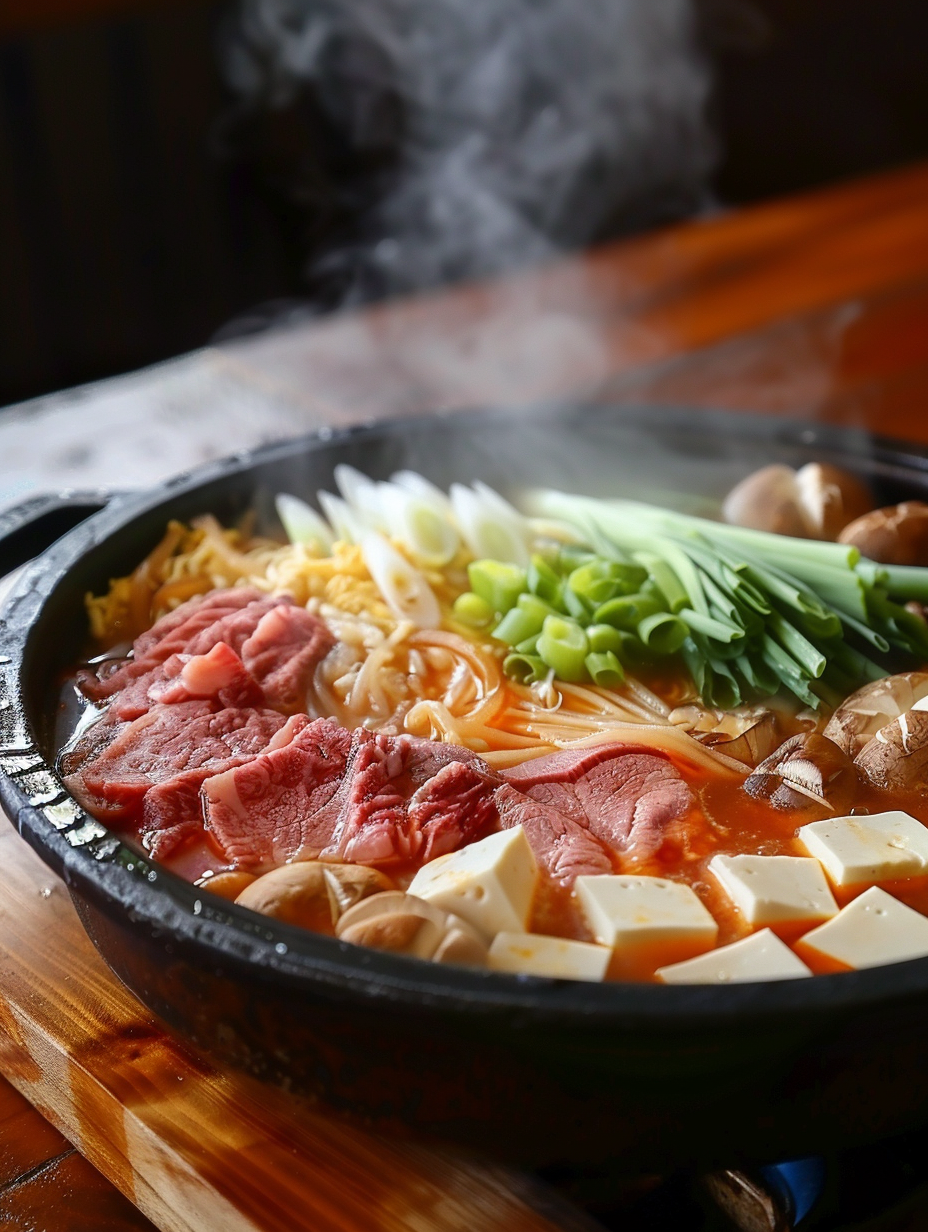
Sukiyaki is one of Japan’s most beloved comfort meals, bringing together thinly sliced beef, seasonal vegetables, tofu, and noodles in a gently simmered, sweet-savory broth. Cooked and served straight from the pot, this dish is designed for relaxed, communal dining where flavors deepen with every bite. Simple to prepare yet rich in tradition, sukiyaki is perfect for cozy dinners, special occasions, or anytime you want a warming, satisfying meal.

🍲 Sukiyaki (Japanese Beef & Vegetable Hot Pot)
Equipment
- Large shallow pot or hot pot
- Cast-iron skillet or wide saucepan (alternative)
- Tongs or long chopsticks
- Cutting board
- Sharp knife
- Measuring cups and spoons
- Small bowls for serving
Ingredients
Protein & Noodles
- 1 lb 450 g thinly sliced beef (ribeye, sirloin, or chuck)
- 7 oz 200 g shirataki noodles or udon noodles
Vegetables
- 1/2 napa cabbage chopped
- 1 small bunch chrysanthemum greens or spinach
- 1 small onion sliced
- 6–8 shiitake mushrooms stems removed, caps sliced
- 1 bunch enoki mushrooms optional
- 1 block firm tofu sliced into thick pieces
- 2 green onions cut into 2-inch pieces
Sukiyaki Sauce (Warishita)
- 1/2 cup soy sauce
- 1/2 cup mirin
- 1/4 cup sugar
- 1/2 cup dashi or low-sodium beef broth
Optional for Serving
- Cooked rice
- Lightly beaten eggs optional, skip if you prefer everything fully cooked without dipping
Instructions
Prepare the sauce
- In a bowl, whisk together soy sauce, mirin, sugar, and dashi until the sugar dissolves. Set aside.
Prep the noodles
- If using shirataki noodles, rinse thoroughly and boil for 2–3 minutes to remove odor. Drain well.
Heat the pot
- Place your pot over medium heat. Lightly oil the bottom if needed.
Cook the beef
- Add a few slices of beef to the hot pot and sear briefly until just cooked. Sprinkle lightly with sugar (traditional method) for extra richness.
Add vegetables & tofu
- Arrange cabbage, onion, mushrooms, tofu, noodles, and green onions around the beef.
Simmer
- Pour the sukiyaki sauce over everything. Bring to a gentle simmer and cook for 10–15 minutes, turning ingredients so everything cooks evenly.
Finish with greens
- Add chrysanthemum greens or spinach in the last 2–3 minutes so they stay tender and vibrant.
Notes
- Beef selection: Thinly sliced beef is essential for sukiyaki. Ribeye, sirloin, or chuck work best. Partially freezing the beef makes it easier to slice very thin at home.
- Fully cooked: All ingredients are completely cooked in the simmering sauce before serving. The optional egg dip is traditional but can be skipped.
- Sweetness control: Sukiyaki is meant to be slightly sweet. Adjust the sugar to taste if you prefer a more savory profile.
- Noodle choice: Shirataki noodles keep the dish lighter, while udon noodles make it heartier.
- Vegetable swaps: Carrots, daikon, bok choy, or leeks can be added without changing cook times much.
- Broth balance: Add a splash of water or dashi during cooking if the sauce reduces too much.
- Leftovers: Leftovers reheat well on the stovetop but may be saltier—add water when reheating.
FAQ
Can I make sukiyaki without dashi?
Yes. If you don’t have dashi, low-sodium beef or vegetable broth works well. The flavor will be slightly different but still rich and savory.
Is sukiyaki supposed to be very sweet?
Sukiyaki is traditionally mildly sweet, but it should not taste sugary. You can easily reduce the sugar or balance it with extra soy sauce to suit your taste.
Can I prepare sukiyaki ahead of time?
You can prep all ingredients and the sauce in advance, but sukiyaki is best cooked just before serving so the vegetables stay tender and the beef remains soft.
What’s the best way to serve sukiyaki for guests?
Serve it directly from the pot at the table and let guests scoop out cooked portions. Keep extra sauce or broth nearby to refresh the pot as it simmers.
Can I make sukiyaki without beef?
Absolutely. You can substitute mushrooms, tofu, seitan, or sliced tempeh for a vegetarian-friendly version while keeping the same flavorful broth.
Do I need a special hot pot?
No. A wide, shallow pan or cast-iron skillet works perfectly for home cooking.
🍲 Love Japanese Flavors? Try These Recipes Too!
- Savory & Sweet Pairing: Check out our juicy Japanese Teriyaki Pineapple Burger — a fun fusion of east-meets-west tastes.
- Sweet Breakfast Treats: Warm up with Mochi Jam-Filled Pancakes or indulge in Matcha French Toast for a cozy morning.
- Noodle Comfort: For another comforting noodle dish with Japanese flair, try Ginger Chicken Soba Noodles.
- Dessert Inspiration: After your hot pot feast, treat yourself to our moist Black Sesame Swirl Pound Cake — a beautiful balance of nutty and sweet.
Leave a Reply