
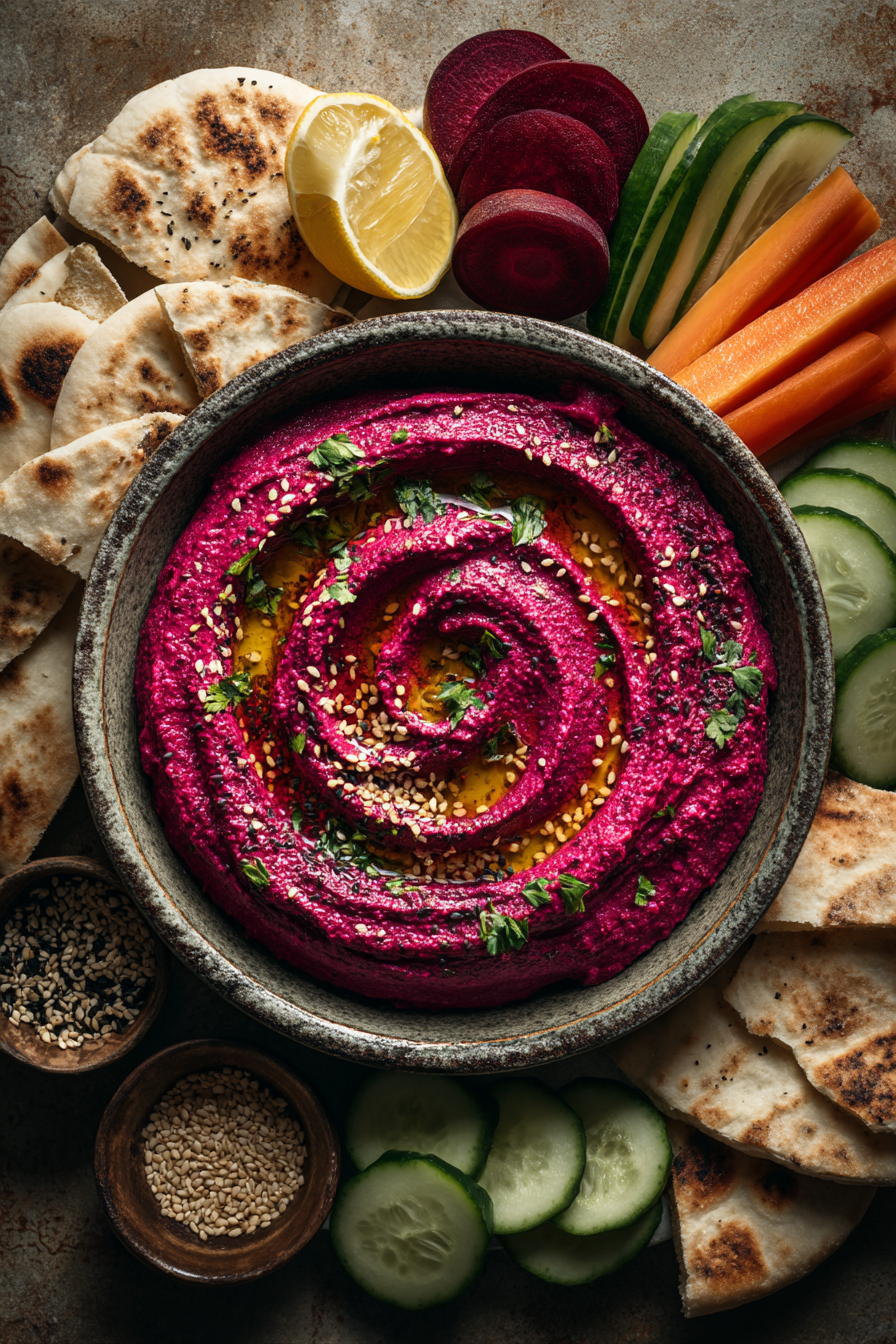
Looking for a colorful twist on traditional hummus? This Creamy Roasted Beetroot Hummus Recipe combines sweet roasted beets, protein-packed chickpeas, rich tahini, fresh lemon juice, and roasted garlic into a smooth, vibrant dip that’s as delicious as it is beautiful. The roasted beetroot adds a naturally sweet flavor and stunning ruby-pink color, making this homemade hummus a standout addition to snack boards, appetizers, and Mediterranean-inspired meals.
Whether you’re serving it with warm pita bread, crunchy vegetables, crackers, or spreading it on sandwiches and wraps, this roasted beetroot hummus is an easy recipe that delivers incredible flavor with simple ingredients. It’s naturally vegetarian, packed with fiber, and perfect for meal prep, entertaining, or healthy snacking throughout the week.
With its creamy texture, bright color, and balanced blend of savory and tangy flavors, this homemade beetroot hummus is guaranteed to become one of your favorite healthy dip recipes.
❤️ Why You’ll Love This Beetroot Hummus Recipe
A Beautiful and Vibrant Appetizer
This beetroot hummus recipe brings stunning color to any table. The roasted beetroot creates a naturally vibrant ruby-pink hue that instantly elevates snack boards, appetizer spreads, and holiday gatherings. It looks impressive while requiring only a handful of simple ingredients.
Perfectly Creamy and Smooth
Thanks to a combination of chickpeas, tahini, olive oil, and ice water, this roasted beetroot hummus has an incredibly silky texture. Every bite is rich, smooth, and spreadable, making it perfect for dipping vegetables, pita bread, and crackers.
Balanced Sweet and Savory Flavor
Roasted beetroot adds natural sweetness and earthy depth, while fresh lemon juice, garlic, and tahini provide the classic savory flavor hummus lovers expect. The result is a well-balanced dip that is both unique and familiar.
Easy to Make with Simple Ingredients
This homemade beetroot hummus comes together with everyday pantry staples and requires very little hands-on preparation. Once the beets are roasted, the food processor does most of the work, making it an easy recipe for both beginners and experienced home cooks.
Perfect for Meal Prep
Beetroot hummus stores beautifully in the refrigerator and often tastes even better the next day. It can be used as a healthy snack, sandwich spread, wrap filling, grain bowl topping, or party appetizer throughout the week.
Naturally Vegetarian and Nutritious
Made with wholesome ingredients like chickpeas, beetroot, tahini, and olive oil, this roasted beet hummus is packed with flavor while fitting into a variety of eating styles. It’s a delicious way to add more vegetables and plant-based ingredients to your meals.
❤️ Ingredient Notes for Beetroot Hummus
Roasted Beetroot
Roasted beetroot gives this beetroot hummus its naturally sweet flavor, earthy depth, and beautiful ruby-pink color. Roasting is the best method because it concentrates the beet’s flavor and prevents the hummus from becoming watery. For the best balance, use about 7 ounces of roasted beetroot, peeled and chopped.
Chickpeas
Canned chickpeas make this homemade beetroot hummus quick and easy. Drain and rinse them well before blending to remove excess sodium and improve the flavor. For an extra-smooth texture, simmer the chickpeas for 10 to 15 minutes before adding them to the food processor.
Tahini
Tahini adds rich, nutty flavor and helps create a creamy hummus texture. Use a smooth, pourable tahini for the best results. If your tahini is very thick or bitter, the hummus may need a little extra lemon juice or ice water to balance the flavor.
Fresh Lemon Juice
Fresh lemon juice brightens the earthy flavor of the roasted beetroot and balances the richness of the tahini and olive oil. Bottled lemon juice is not recommended because it can taste flat or sharp in a simple beet hummus recipe.
Roasted Garlic
Roasted garlic gives this roasted beetroot hummus a mellow, savory flavor without overpowering the dip. Roasting the garlic softens its sharpness and adds a subtle sweetness that pairs beautifully with the beets.
Extra Virgin Olive Oil
Extra virgin olive oil adds richness, smoothness, and classic Mediterranean flavor. Blend some directly into the hummus, then drizzle a little more on top before serving for a glossy, restaurant-style finish.
Kosher Salt and Black Pepper
Kosher salt enhances the chickpeas, tahini, lemon, and roasted beetroot. Start with the listed amount, then taste and adjust before serving. Freshly ground black pepper adds a gentle savory note without overwhelming the bright beet flavor.
Ground Cumin
A small amount of ground cumin adds warmth and depth to this beetroot hummus recipe. It should be subtle, not dominant, so the sweet roasted beetroot and creamy tahini remain the main flavors.
Ice Water
Ice water helps loosen the hummus and creates a lighter, fluffier texture. Add it slowly while the food processor is running until the roasted beet hummus is smooth, creamy, and easy to scoop or spread.
Optional Garnishes
Olive oil, toasted sesame seeds, parsley, feta cheese, smoked paprika, and microgreens all make beautiful garnishes for beetroot hummus. These toppings add color, texture, and extra flavor, making the dip perfect for appetizer boards and Mediterranean mezze platters.
❤️ How to Make Beetroot Hummus
Roast the Beetroot
Preheat the oven to 400°F. Wrap the beetroot tightly in aluminum foil and place it on a baking sheet. Roast for 45 to 60 minutes, or until the beetroot is fork tender. Roasting the beetroot creates a sweeter, deeper flavor and gives this beetroot hummus its beautiful vibrant color.
Roast the Garlic
During the final 20 minutes of roasting, wrap the garlic cloves in a small piece of foil and place them in the oven with the beetroot. Roasted garlic gives the hummus a mellow, savory flavor that blends perfectly with the sweet beetroot, chickpeas, tahini, and lemon juice.
Cool, Peel, and Chop
Let the roasted beetroot cool slightly, then peel away the skin and roughly chop it. Measure about 7 ounces of roasted beetroot for the best balance of color, sweetness, and classic hummus flavor.
Blend the Tahini and Lemon
Add the tahini and fresh lemon juice to a food processor. Process for about 1 minute until the mixture becomes creamy, thickened, and slightly lighter in color. This step helps create a smoother, fluffier roasted beetroot hummus.
Add the Chickpeas and Beetroot
Add the drained and rinsed chickpeas, roasted beetroot, roasted garlic, olive oil, kosher salt, black pepper, and ground cumin to the food processor. Blend for 2 to 3 minutes, stopping to scrape down the sides as needed so everything combines evenly.
Add Ice Water for Creaminess
With the food processor running, add ice water 1 tablespoon at a time until the beetroot hummus becomes smooth, creamy, and fluffy. The ice water loosens the dip and helps create a silky texture that is perfect for dipping, spreading, and serving on mezze platters.
Taste and Adjust
Taste the homemade beetroot hummus before serving. Add extra lemon juice for brightness, a pinch more salt for savory flavor, or a small drizzle of olive oil for richness. Adjusting at the end helps balance the earthy beetroot, creamy tahini, and chickpeas.
Garnish and Serve
Spoon the roasted beet hummus into a serving bowl and create swirls with the back of a spoon. Drizzle with olive oil and garnish with toasted sesame seeds, parsley, feta cheese, smoked paprika, or microgreens. Serve with pita bread, crackers, fresh vegetables, sandwiches, wraps, or Mediterranean-inspired snack boards.
❤️ Pro Tips for the Best Beetroot Hummus
Roast Instead of Boil the Beetroot
Roasting beetroot concentrates its natural sweetness and creates a richer flavor than boiling. It also helps prevent excess moisture, resulting in a thicker, creamier beetroot hummus with a more vibrant color.
Use Fresh Lemon Juice
Fresh lemon juice provides the brightest flavor and balances the earthy sweetness of the roasted beetroot. Freshly squeezed juice makes a noticeable difference in homemade hummus recipes.
Choose a Good Quality Tahini
Tahini is one of the most important ingredients in beetroot hummus. A smooth, pourable tahini creates a richer texture and more balanced flavor than thick or overly bitter varieties.
Blend the Tahini First
Processing the tahini and lemon juice before adding the remaining ingredients helps create an exceptionally smooth and fluffy hummus. This simple technique is commonly used in restaurant-style hummus recipes.
Add Ice Water Slowly
Ice water helps emulsify the ingredients and creates a silky texture. Add it gradually while blending until the hummus reaches your desired consistency. Too much liquid can make the hummus thin, so add it one tablespoon at a time.
Simmer the Chickpeas for Extra Creaminess
For ultra-smooth beetroot hummus, simmer the chickpeas in water for 10 to 15 minutes before blending. Softer chickpeas break down more easily and create a creamier final texture.
Scrape Down the Food Processor Often
Stopping to scrape down the sides of the bowl ensures all of the beetroot, chickpeas, and tahini blend evenly. This helps create a consistent texture throughout the hummus.
Adjust the Seasoning Before Serving
Beetroot can vary in sweetness depending on the variety and season. Taste the hummus before serving and adjust with additional lemon juice, salt, or olive oil to achieve the perfect balance of flavors.
Let the Hummus Chill
While beetroot hummus can be served immediately, chilling it for at least 1 hour allows the flavors to meld together. The result is a more balanced and flavorful dip.
Garnish for Maximum Presentation
A drizzle of olive oil, toasted sesame seeds, chopped parsley, smoked paprika, or crumbled feta transforms this beetroot hummus into a stunning appetizer. The colorful toppings make it especially beautiful for parties, holidays, and mezze platters.
❤️ Beetroot Hummus Variations
Spicy Beetroot Hummus
For a spicy beetroot hummus, add a pinch of cayenne pepper, crushed red pepper flakes, or a spoonful of harissa before blending. The heat balances the sweet roasted beetroot and creates a bold, flavorful dip for pita chips, vegetables, and mezze platters.
Feta Beetroot Hummus
For a creamy, tangy variation, garnish the roasted beetroot hummus with crumbled feta cheese before serving. The salty feta pairs beautifully with the earthy beetroot, nutty tahini, and bright lemon juice.
Herbed Beetroot Hummus
Blend in fresh parsley, dill, cilantro, or mint for a fresh herb flavor. Herbs add brightness and make this homemade beetroot hummus taste especially fresh with cucumber slices, warm pita bread, and grain bowls.
Lemon Garlic Beetroot Hummus
For a brighter, more savory beet hummus, add an extra tablespoon of fresh lemon juice and one additional roasted garlic clove. This variation is perfect if you love bold, tangy hummus with a stronger garlic flavor.
Roasted Red Pepper Beetroot Hummus
Add roasted red peppers for a sweeter, smokier twist on classic beetroot hummus. The peppers blend smoothly with the roasted beetroot and chickpeas, creating a colorful dip with a rich Mediterranean-inspired flavor.
Avocado Beetroot Hummus
Blend in half of a ripe avocado for an extra-creamy beetroot hummus with a buttery texture. This variation is best served fresh, since avocado can darken slightly after storage.
Walnut Beetroot Hummus
Add a few tablespoons of toasted walnuts for a nutty, earthy flavor that pairs beautifully with roasted beetroot. Walnuts also add richness and make the hummus taste heartier and more complex.
Greek Yogurt Beetroot Hummus
For a lighter, tangier texture, blend in a spoonful of plain Greek yogurt. This creates a creamy beetroot hummus dip with extra brightness, though it will no longer be dairy-free.
Smoky Beetroot Hummus
Add smoked paprika, roasted garlic, or a small amount of chipotle powder for a smoky beetroot hummus with deeper flavor. This version works especially well on sandwiches, wraps, and appetizer boards.
Extra-Tahini Beetroot Hummus
If you love rich, restaurant-style hummus, add an extra tablespoon or two of tahini. This creates a thicker, creamier beetroot hummus with a stronger sesame flavor and a luxurious texture.
❤️ Storage and Make-Ahead Tips for Beetroot Hummus
How to Store Beetroot Hummus
Store leftover beetroot hummus in an airtight container in the refrigerator for up to 5 days. Keeping the hummus sealed helps maintain its creamy texture and prevents it from absorbing odors from other foods in the refrigerator.
Keep It Fresh Longer
For the freshest flavor, smooth the surface of the hummus before storing and drizzle a thin layer of extra virgin olive oil over the top. This helps reduce exposure to air and keeps the hummus moist and flavorful.
Expect the Color to Deepen
As the roasted beetroot hummus sits, the vibrant pink color may deepen slightly. This is completely normal and does not affect the flavor or texture of the dip.
Refreshing Chilled Hummus
Beetroot hummus naturally thickens after refrigeration. Before serving, stir the hummus well and add a teaspoon or two of water or lemon juice if needed to restore its smooth, creamy consistency.
Make Ahead for Parties
This homemade beetroot hummus is an excellent make-ahead appetizer. Prepare it up to 2 days in advance and store it in the refrigerator until ready to serve. In fact, the flavors often improve as the hummus chills and the ingredients have time to meld together.
Prepare the Ingredients in Advance
To save time, roast the beetroot and garlic a day or two ahead of time. Store them in the refrigerator, then blend the hummus when you are ready to serve. This makes entertaining and meal prep much easier.
Freezing Beetroot Hummus
Beetroot hummus can be frozen for up to 3 months in a freezer-safe container. Leave a little space at the top of the container to allow for expansion during freezing.
How to Thaw Frozen Hummus
Transfer frozen beetroot hummus to the refrigerator and allow it to thaw overnight. Stir thoroughly before serving and add a splash of water, lemon juice, or olive oil if needed to restore its creamy texture.
Best Served Chilled or Slightly Cool
While this roasted beetroot hummus can be enjoyed immediately after making it, many people find that it tastes even better after chilling for at least 1 hour. The flavors become more balanced and the texture becomes even creamier.
❤️ Beetroot Hummus FAQs
What does beetroot hummus taste like?
Beetroot hummus tastes creamy, savory, slightly sweet, and earthy. The roasted beetroot adds natural sweetness and a vibrant color, while chickpeas, tahini, lemon juice, garlic, and olive oil keep the flavor balanced and similar to classic hummus.
Can I use canned beets for beetroot hummus?
Yes, you can use canned beets, but roasted fresh beetroot gives the best flavor and color. If using canned beets, drain them very well and pat them dry before blending so the hummus does not become watery.
Can I make beetroot hummus without tahini?
Yes, you can make beetroot hummus without tahini, but the flavor and texture will be less rich. Substitute extra olive oil, Greek yogurt, sunflower seed butter, or a small amount of almond butter depending on your preference.
How do I make beetroot hummus smoother?
For smoother beetroot hummus, simmer the chickpeas for 10 to 15 minutes before blending, use smooth tahini, and add ice water slowly while the food processor is running. Blending for several minutes also helps create a creamy texture.
How long does beetroot hummus last?
Homemade beetroot hummus lasts up to 5 days in an airtight container in the refrigerator. Stir before serving and add a small splash of water or lemon juice if it thickens after chilling.
Can you freeze beetroot hummus?
Yes, beetroot hummus can be frozen for up to 3 months. Thaw it overnight in the refrigerator, then stir well and add a little water, lemon juice, or olive oil to restore the creamy texture.
Is beetroot hummus healthy?
Beetroot hummus can be a healthy dip or spread because it is made with chickpeas, roasted beetroot, tahini, lemon juice, garlic, and olive oil. It contains fiber, plant-based protein, and nourishing fats, making it a flavorful option for snacks, wraps, and appetizer boards.
What do you eat with beetroot hummus?
Beetroot hummus pairs well with pita bread, pita chips, crackers, cucumber slices, carrots, celery, bell peppers, grain bowls, sandwiches, wraps, and Mediterranean mezze platters.
Why is my beetroot hummus too thick?
Beetroot hummus can become too thick if the chickpeas are firm, the tahini is dense, or there is not enough liquid. Add ice water one tablespoon at a time while blending until the hummus becomes smooth, creamy, and easy to scoop.
Why is my beetroot hummus watery?
Beetroot hummus may become watery if the beets are boiled, canned beets are not drained well, or too much liquid is added during blending. Roasting the beetroot and adding ice water slowly helps create the best texture.

❤️ Creamy Roasted Beetroot Hummus
Equipment
- Food processor
- Baking sheet
- aluminum foil
- measuring cups
- Measuring spoons
- Chef’s knife
- Cutting board
- Spatula
- Serving bowl
- spoon
Ingredients
- 7 ounces roasted beetroot peeled and chopped
- 1 15-ounce can chickpeas, drained and rinsed
- ⅓ cup plus 1 tablespoon tahini
- 3 tablespoons fresh lemon juice
- 2 roasted garlic cloves
- 2 tablespoons extra virgin olive oil
- ¾ teaspoon kosher salt
- ¼ teaspoon freshly ground black pepper
- ⅛ teaspoon ground cumin
- 2 to 4 tablespoons ice water
Optional Garnishes
- Extra virgin olive oil
- Toasted sesame seeds
- Chopped fresh parsley
- Crumbled feta cheese
- Smoked paprika
- Microgreens
Instructions
- Preheat your oven to 400°F (200°C).
- Wrap the beetroot tightly in aluminum foil and place it on a baking sheet. Roast for 45 to 60 minutes, or until fork tender.
- During the final 20 minutes of roasting, wrap the garlic cloves in a small piece of foil and place them in the oven until soft.
- Let the beetroot cool slightly, then peel and roughly chop it.
- Add the tahini and lemon juice to a food processor. Blend for about 1 minute until creamy and slightly thickened.
- Add the chickpeas, roasted beetroot, roasted garlic, olive oil, salt, pepper, and cumin.
- Process for 2 to 3 minutes, scraping down the sides of the bowl as needed.
- With the processor running, add the ice water one tablespoon at a time until the hummus becomes smooth, creamy, and fluffy.
- Taste and adjust the seasoning with additional salt or lemon juice if desired.
- Transfer the hummus to a serving bowl and create decorative swirls with the back of a spoon.
- Top with your favorite garnishes and serve immediately, or chill for 1 hour for even better flavor.
Notes
❤️ More Mediterranean-Inspired Recipes You’ll Love
If you enjoyed this creamy beetroot hummus, be sure to try some of these flavorful Mediterranean and Middle Eastern-inspired recipes. From spicy breakfast dishes to savory lamb creations and indulgent desserts, these recipes pair beautifully with the bold flavors of homemade hummus.
Spicy and Flavorful Favorites
For a hearty meal packed with bold North African flavors, try this Harissa Shakshuka. The rich tomato sauce, warming spices, and perfectly cooked eggs make it an excellent addition to a Mediterranean-inspired brunch spread.
If you’re craving something savory and satisfying, this Lamb Shawarma Burger delivers classic shawarma flavors in burger form with aromatic spices and juicy lamb.
For another delicious lamb recipe, don’t miss these Moroccan Lamb Harissa Burgers with Preserved Lemon Aioli. The spicy harissa and bright lemon flavors pair wonderfully with Mediterranean appetizers like beetroot hummus.
Sweet Treats to Finish the Meal
After enjoying your homemade beetroot hummus, satisfy your sweet tooth with these decadent Dubai Chocolate Brownies. Rich chocolate and luxurious flavors make them a memorable dessert for any occasion.
For something elegant and unique, these Rose Pistachio Nougat Squares feature delicate floral notes and crunchy pistachios that beautifully complement Mediterranean-inspired menus.
Leave a Reply