
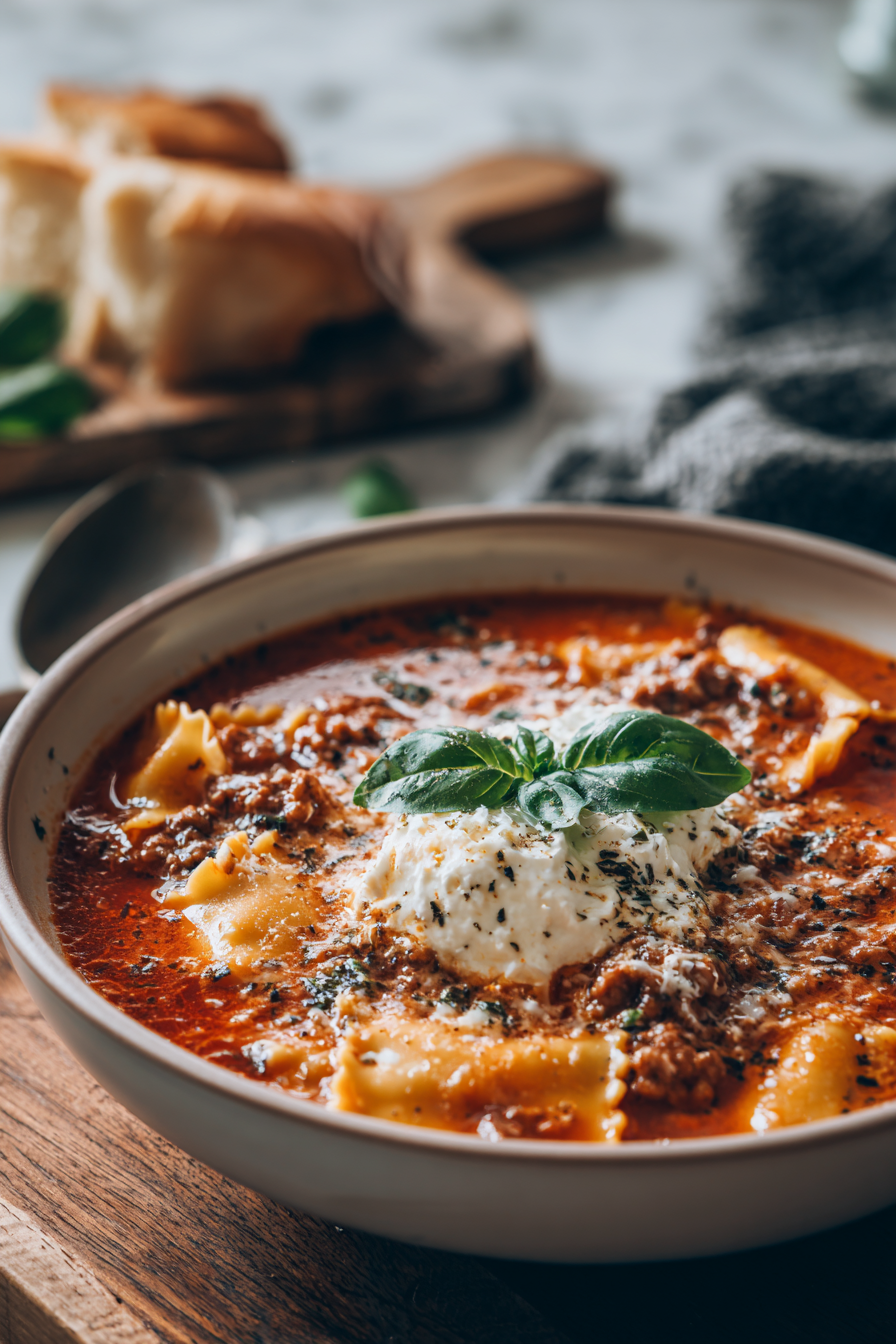
If you love classic lasagna but want something faster, easier, and just as satisfying, this lasagna soup is about to become your go-to dinner. It has all the rich, hearty flavors of traditional lasagna—savory meat, tomato sauce, tender noodles, and creamy cheese—transformed into a cozy, one-pot meal.
This easy lasagna soup recipe is perfect for busy weeknights, meal prep, or when you’re craving comfort food without the hassle of layering and baking. With a deeply flavorful broth, perfectly cooked pasta, and a creamy ricotta topping that melts into every bite, this dish delivers restaurant-quality taste with minimal effort.
❤️ Why You’ll Love This Lasagna Soup Recipe
🍲 All the Flavor of Lasagna, Less Work
This lasagna soup delivers everything you love about classic lasagna—rich tomato sauce, savory meat, tender noodles, and creamy cheese—without the time-consuming layering and baking.
🧀 Creamy, Melty Cheese in Every Bite
The ricotta, mozzarella, and parmesan topping melts into the hot soup, giving you that signature lasagna-style cheesy goodness in every spoonful.
⏱️ Perfect for Easy Weeknight Dinners
This one-pot lasagna soup recipe is quick, simple, and family-friendly, making it ideal for busy nights when you want something hearty and comforting.
🍅 Deep, Rich Tomato Flavor
The broth is packed with flavor from browned meat, tomato paste, crushed tomatoes, Italian seasoning, and a savory parmesan finish.
🥣 Great for Meal Prep and Leftovers
This cozy soup stores well and reheats beautifully. For best results, keep the pasta separate so it stays perfectly tender.
🛒 Ingredient Notes for Lasagna Soup
Ground Beef or Italian Sausage
Ground beef creates a hearty, classic base for this lasagna soup, while Italian sausage adds extra seasoning, richness, and deeper lasagna-style flavor. For the best result, use half ground beef and half Italian sausage.
Onion and Garlic
Finely diced onion and fresh garlic build the savory foundation of the soup. Cooking them after browning the meat helps absorb the flavor left in the pot.
Tomato Paste
Tomato paste is one of the most important ingredients in this easy lasagna soup recipe. Cooking it for a few minutes before adding the liquid creates a richer, deeper tomato flavor and helps remove any raw tomato taste.
Crushed Tomatoes and Diced Tomatoes
Crushed tomatoes create a thick, saucy broth, while diced tomatoes add texture. Together, they make the soup taste closer to traditional lasagna sauce.
Low-Sodium Beef Broth and Water
Low-sodium beef broth adds savory depth without making the soup too salty. A little water keeps the broth balanced as the soup simmers and reduces.
Italian Seasoning and Paprika
Italian seasoning gives the soup classic herb flavor, while paprika adds subtle warmth and color. Red pepper flakes can be added if you want a lightly spicy lasagna soup.
Worcestershire Sauce
Worcestershire sauce adds a small but important savory boost. It deepens the meat sauce flavor without making the soup taste unusual.
Lasagna Noodles
Broken lasagna noodles give this soup its classic lasagna feel. For the best texture, do not add too much pasta, since noodles absorb broth as the soup sits.
Ricotta Cheese
Ricotta creates the creamy, lasagna-style topping. When spooned over the hot soup, it melts slightly into the broth for a rich and comforting finish.
Mozzarella Cheese
Low-moisture mozzarella adds the melty cheese flavor you expect from lasagna. Keeping the amount moderate prevents the topping from becoming too stringy.
Parmesan Cheese
Parmesan adds salty, nutty depth to both the cheese topping and the soup. A parmesan rind can also be simmered in the broth for extra flavor.
Olive Oil or Butter
A small amount of olive oil or butter stirred in at the end rounds out the acidity of the tomatoes and gives the soup a smoother, more finished flavor.
🍲 How to Make Lasagna Soup
Brown the Meat
Heat a large pot or Dutch oven over medium-high heat. Add the ground beef or Italian sausage and cook until deeply browned, letting the meat sit briefly before stirring so it develops rich flavor.
Cook the Onion and Garlic
Add the diced onion and cook until soft and lightly golden. Stir in the garlic and cook for 30 to 60 seconds, just until fragrant.
Build the Tomato Base
Stir in the tomato paste and cook for 2 to 3 minutes until it darkens slightly. This gives the lasagna soup a richer, deeper tomato flavor.
Add the Broth and Tomatoes
Pour in the crushed tomatoes, diced tomatoes, beef broth, water, Worcestershire sauce, Italian seasoning, paprika, salt, pepper, and parmesan rind if using. Scrape the bottom of the pot to lift up any browned bits.
Simmer the Soup
Let the soup simmer uncovered for 25 to 30 minutes so the flavors can deepen and the broth can taste more like classic lasagna sauce.
Cook the Lasagna Noodles
Add the broken lasagna noodles and cook for 7 to 8 minutes, or until just al dente. Turn off the heat right away so the noodles do not become too soft.
Make the Cheese Topping
In a small bowl, mix ricotta, mozzarella, parmesan, heavy cream, salt, and pepper until smooth and creamy.
Finish and Serve
Stir a little olive oil or butter into the soup off the heat. Ladle the lasagna soup into bowls, add a scoop of the creamy cheese topping, and gently swirl before serving.
💡 Pro Tips for the Best Lasagna Soup
Brown the Meat for Maximum Flavor
Let the meat sit undisturbed at first so it develops a deep brown crust. This step builds a rich, savory base that makes the lasagna soup taste like a slow-cooked sauce.
Cook the Tomato Paste Properly
Do not skip cooking the tomato paste for a few minutes before adding liquid. This removes any raw tomato taste and creates a deeper, more concentrated flavor.
Use Low-Sodium Broth
Starting with low-sodium broth allows you to control the salt level as the soup simmers and reduces. You can always add more salt at the end if needed.
Control the Pasta Texture
Cook the lasagna noodles just until al dente and turn off the heat right away. The noodles will continue to soften in the hot broth, so this prevents them from becoming mushy.
Cook Pasta Separately for Best Leftovers
If you plan to store the soup, cook the noodles separately and add them to each bowl. This keeps the pasta from absorbing too much liquid and becoming overly soft.
Add a Parmesan Rind for Depth
Simmering a parmesan rind in the soup adds a subtle, savory richness that makes the broth taste more like traditional lasagna sauce.
Balance the Acidity at the End
Taste the soup after simmering. If the tomatoes taste too sharp, add a small pinch of sugar or a splash of cream to balance the flavor without making it overly sweet.
Finish with Olive Oil or Butter
Stirring in a small amount of olive oil or butter off the heat smooths out the broth and enhances the overall richness of the soup.
Serve with Cheese on Top, Not Mixed In
Adding the ricotta mixture on top instead of stirring it into the pot keeps the creamy, layered texture similar to classic lasagna.
🔄 Lasagna Soup Variations
Spicy Lasagna Soup
Add extra red pepper flakes, spicy Italian sausage, or a pinch of cayenne for a bolder lasagna soup with a little heat. This version is perfect if you love spicy tomato-based soups.
Creamy Lasagna Soup
Stir 1/4 to 1/2 cup heavy cream into the soup at the end for a richer, creamier broth. This makes the recipe extra cozy while still keeping the classic lasagna flavor.
Chicken Lasagna Soup
Swap the ground beef for ground chicken or shredded cooked chicken, and use chicken broth instead of beef broth. This creates a lighter but still hearty lasagna soup recipe.
Vegetarian Lasagna Soup
Replace the meat with mushrooms, zucchini, lentils, or plant-based crumbles. Use vegetable broth instead of beef broth for a comforting vegetarian lasagna soup.
Spinach Lasagna Soup
Stir in a few handfuls of fresh spinach during the last few minutes of cooking. The spinach adds color, nutrients, and a classic lasagna-inspired flavor.
Extra Cheesy Lasagna Soup
Add more parmesan to the broth or increase the mozzarella in the cheese topping. For best texture, keep the extra cheese in the topping instead of melting too much directly into the soup.
Low-Carb Lasagna Soup
Skip the noodles and use zucchini ribbons, cabbage strips, or hearts of palm pasta. This keeps the soup hearty while lowering the carbs.
Turkey Lasagna Soup
Use ground turkey instead of beef for a lighter version. Add a little extra Italian seasoning, parmesan, or olive oil to keep the flavor rich and balanced.
🧊 Storage and Make-Ahead Tips for Lasagna Soup
How to Store Lasagna Soup
Store leftover lasagna soup in an airtight container in the refrigerator for up to 4 days. For the best texture, store the noodles separately from the broth so they do not absorb too much liquid.
How to Reheat Lasagna Soup
Reheat lasagna soup gently on the stovetop over medium-low heat or in the microwave until hot. Add a splash of broth or water as needed because the soup will thicken as it sits.
Can You Freeze Lasagna Soup?
Yes, lasagna soup freezes well, but it is best to freeze it without the pasta and cheese topping. Store the cooled soup base in freezer-safe containers for up to 3 months.
How to Make Lasagna Soup Ahead of Time
Prepare the soup base ahead of time and store it in the refrigerator. When ready to serve, reheat the soup, cook the noodles separately, and add the creamy ricotta topping fresh.
Best Way to Store the Cheese Topping
Keep the ricotta, mozzarella, and parmesan topping in a separate airtight container in the refrigerator for up to 3 days. Stir before serving so it stays smooth and creamy.
Meal Prep Tip
For easy meal prep, portion the soup base into containers and store cooked noodles separately. This keeps every bowl of lasagna soup hearty, flavorful, and perfectly textured.
🔄 Lasagna Soup Variations
Spicy Lasagna Soup
Add extra red pepper flakes, spicy Italian sausage, or a small pinch of cayenne for a warmer, bolder lasagna soup with extra heat.
Creamy Lasagna Soup
Stir 1/4 to 1/2 cup heavy cream into the soup at the end for a richer, creamier lasagna soup while keeping the classic tomato flavor.
Chicken Lasagna Soup
Use ground chicken or shredded cooked chicken instead of beef, and swap the beef broth for chicken broth for a lighter version.
Vegetarian Lasagna Soup
Replace the meat with mushrooms, zucchini, lentils, or plant-based crumbles, and use vegetable broth instead of beef broth.
Spinach Lasagna Soup
Stir fresh spinach into the soup during the last few minutes of cooking for added color, flavor, and a classic lasagna-inspired touch.
Turkey Lasagna Soup
Use ground turkey instead of beef for a lighter lasagna soup. Add extra parmesan, Italian seasoning, or olive oil to keep the flavor rich.
Low-Carb Lasagna Soup
Skip the noodles and use zucchini ribbons, cabbage strips, or hearts of palm pasta for a lower-carb version of this cozy soup.
Extra Cheesy Lasagna Soup
Add more parmesan to the broth or increase the mozzarella in the cheese topping for an extra cheesy lasagna soup. Keep most of the cheese in the topping for the best texture.
🧊 Storage and Make-Ahead Tips for Lasagna Soup
How to Store Lasagna Soup
Store leftover lasagna soup in an airtight container in the refrigerator for up to 4 days. For the best texture, keep the noodles separate from the soup base so they do not absorb too much broth.
How to Reheat Lasagna Soup
Reheat lasagna soup on the stovetop over medium-low heat or in the microwave until hot. Add a splash of broth or water as needed because the soup thickens as it sits.
Can You Freeze Lasagna Soup?
Yes, lasagna soup freezes well, but it is best to freeze the soup base without the noodles or cheese topping. Store in freezer-safe containers for up to 3 months.
How to Make Lasagna Soup Ahead of Time
Make the tomato meat soup base ahead of time and refrigerate it until ready to serve. When serving, reheat the soup, add freshly cooked noodles, and top each bowl with the creamy ricotta mixture.
Best Way to Store the Cheese Topping
Store the ricotta, mozzarella, and parmesan topping in a separate airtight container in the refrigerator for up to 3 days. Stir before using so it stays smooth and creamy.
Meal Prep Tip
For meal prep, portion the soup base and cooked noodles into separate containers. This keeps every serving of lasagna soup rich, hearty, and perfectly textured.
❓ Lasagna Soup FAQ
Can I make lasagna soup ahead of time?
Yes, lasagna soup is a great make-ahead dinner. For the best texture, prepare the soup base ahead of time and cook the noodles separately when you are ready to serve.
Can I freeze lasagna soup?
Yes, you can freeze lasagna soup for up to 3 months. Freeze the soup without the noodles and cheese topping for the best results.
Why did my lasagna soup get too thick?
Lasagna noodles absorb liquid as they sit, which can make the soup thicker over time. Add extra broth or water when reheating to bring it back to the right consistency.
Can I use a different pasta?
Yes, you can use mafaldine, bowtie, rotini, or broken spaghetti if you do not have lasagna noodles. Choose a sturdy pasta that holds up well in soup.
Can I make lasagna soup without ricotta?
Yes, you can skip the ricotta or replace it with cottage cheese, cream cheese, or extra mozzarella. Ricotta gives the soup the most classic lasagna-style flavor.
How do I keep the noodles from getting mushy?
Cook the noodles just until al dente, then turn off the heat. If you are making the soup for leftovers, cook the pasta separately and add it to each bowl before serving.
What meat is best for lasagna soup?
A mix of ground beef and Italian sausage gives lasagna soup the best flavor. Ground beef keeps it hearty, while sausage adds seasoning and richness.
Can I make lasagna soup creamy?
Yes, stir 1/4 to 1/2 cup heavy cream into the soup at the end for a creamy lasagna soup. You can also add extra ricotta topping to each bowl.

🍲 Lasagna Soup (Rich, Cozy, One-Pot Comfort)
Equipment
- large heavy-bottomed pot or Dutch oven
- Wooden spoon or silicone spatula
- Ladle
- Cutting board
- Chef’s knife
- measuring cups
- Measuring spoons
- Mixing bowl (for cheese topping)
Ingredients
Soup Base
- 1 lb ground beef or ½ lb beef + ½ lb Italian sausage
- 1 small onion finely diced
- 4 cloves garlic minced
- 1 tbsp olive oil only if meat is lean
- 2 tbsp tomato paste
- 1 28 oz can crushed tomatoes
- 1 14.5 oz can diced tomatoes
- 4 cups low-sodium beef broth
- 1 cup water
- 1 tsp kosher salt start, adjust later
- ½ tsp black pepper
- 1½ tsp Italian seasoning
- ½ tsp paprika
- ¼ tsp red pepper flakes optional
- 1 tsp Worcestershire sauce
- 1 parmesan rind optional
Pasta
- 6 oz lasagna noodles broken into pieces
Cheese Topping
- 1 cup ricotta cheese
- ⅔ cup shredded mozzarella
- ½ cup grated parmesan
- 2 tbsp heavy cream
- Pinch salt and pepper
Finish
- 2 tsp olive oil or 1 tbsp butter
- Fresh basil or parsley optional
Instructions
Brown the meat
- Heat pot over medium-high heat. Add meat and cook until deeply browned, letting it sit before stirring. Drain excess grease, leaving about 1–2 tbsp.
Cook aromatics
- Add onion and cook 4–5 minutes until softened and lightly golden. Add garlic and cook 30–60 seconds.
Develop tomato paste
- Stir in tomato paste and cook 2–3 minutes until darker and slightly caramelized.
Build the soup
- Add a splash of broth and scrape up browned bits. Add crushed tomatoes, diced tomatoes, broth, water, Worcestershire sauce, seasonings, and parmesan rind.
Simmer
- Bring to a simmer and cook uncovered for 25–30 minutes. Taste and adjust seasoning if needed.
Cook pasta
- Add broken lasagna noodles and cook 7–8 minutes until just al dente. Turn off heat immediately.
Make cheese topping
- In a bowl, mix ricotta, mozzarella, parmesan, heavy cream, salt, and pepper until smooth.
Finish the soup
- Stir in olive oil or butter.
Serve
- Ladle soup into bowls and top with a scoop of cheese mixture. Lightly swirl before eating.
Notes
- For the best texture, cook the lasagna noodles separately and add them to each bowl before serving. This prevents the pasta from absorbing too much broth and becoming soft over time.
- Using a mix of ground beef and Italian sausage creates a deeper, more authentic lasagna flavor. Sausage adds seasoning and richness that mimics traditional lasagna sauce.
- Cooking the tomato paste until it darkens is a key step. This removes any raw or metallic tomato taste and builds a richer, more concentrated base for the soup.
- Always start with low-sodium broth and season at the end. This helps control salt levels, especially as the soup reduces and the flavors intensify.
- Add a parmesan rind while the soup simmers for extra depth. It slowly melts flavor into the broth and gives a subtle savory boost. Remove it before serving.
- If your soup tastes too acidic, add a very small pinch of sugar or a splash of cream. Adjust gradually so you don’t dull the flavor.
- Stirring in a small amount of butter or olive oil at the end creates a smoother, more balanced finish and enhances the overall richness.
- The soup will naturally thicken as it sits because the pasta absorbs liquid. When reheating, add a splash of broth or water to bring it back to the perfect consistency.
- For meal prep or freezing, store the soup without pasta and add freshly cooked noodles when serving for the best texture.
- Fresh basil, parsley, or extra parmesan on top adds brightness and enhances the classic lasagna-style flavor in every bowl.
🍲 More Cozy Soup Recipes You’ll Love
If you love this lasagna soup, here are more cozy, flavorful soup recipes to try next. These comforting bowls are perfect for weeknight dinners, meal prep, or when you’re craving something warm and satisfying.
- Nigerian Egusi Soup – A rich and hearty soup made with ground melon seeds, bold spices, and deep savory flavor.
- Sichuan Spicy Beef Soup – Packed with bold heat, tender beef, and authentic Sichuan flavors for a warming, spicy kick.
- Parsnip and Apple Soup – A smooth, slightly sweet soup with a cozy, creamy texture and balanced flavor.
- Hot and Sour Soup – A takeout favorite with bold tangy flavor, savory broth, and satisfying texture.
- Creamy Asparagus Soup with Lemon Thyme – Light, fresh, and creamy with bright citrus notes and a smooth finish.
Leave a Reply