
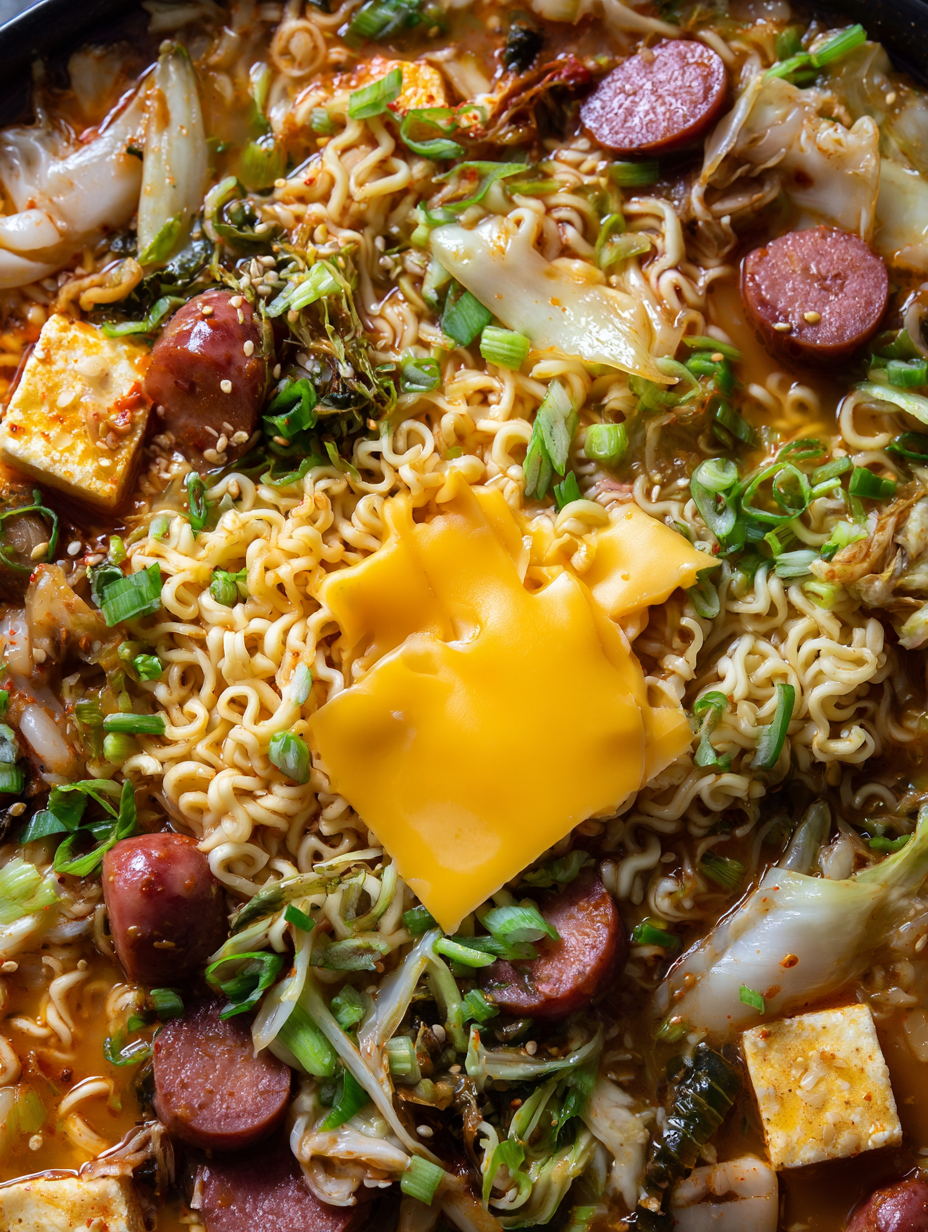
Korean Army Stew (Budae Jjigae) is a bold and comforting Korean hot pot loaded with kimchi, ramen noodles, sausages, tofu, and melty cheese simmered in a rich gochujang broth. This spicy kimchi ramen stew is known for its savory, slightly tangy flavor and hearty mix of ingredients that cook together in one pot.
This easy budae jjigae recipe comes together quickly and delivers authentic Korean army stew flavor at home. Perfect for cozy dinners, this Korean sausage and ramen stew is packed with spice, umami, and comforting textures in every bite.
🍲 Why You’ll Love This Korean Army Stew (Budae Jjigae) Recipe
🌶️ Big Bold Korean Flavor
This Korean Army Stew (Budae Jjigae) is packed with spicy, savory, and tangy flavor from kimchi, gochujang, ramen noodles, and rich broth. Every bite has the comforting heat and hearty texture that makes this classic Korean hot pot so satisfying.
🥘 Easy One-Pot Dinner
This budae jjigae recipe comes together in one pot, making it a simple and practical dinner for busy nights. Everything simmers together in the same pot for an easy meal with minimal cleanup.
🍜 Loaded with Hearty Ingredients
With sausages, tofu, kimchi, ramen, mushrooms, and melty cheese, this Korean army stew is full of texture and flavor. It feels cozy, filling, and perfect for sharing.
🔥 Authentic and Comforting
If you love comforting Korean recipes, this spicy kimchi ramen stew delivers authentic flavor with a rich gochujang broth and classic budae jjigae ingredients. It is warm, bold, and deeply satisfying.
🧀 Easy to Customize
This Korean sausage and ramen stew is easy to customize with your favorite add-ins like Spam, rice cakes, extra mushrooms, or more cheese. You can make it spicier, heartier, or even more loaded depending on what you have on hand.
🥬 Ingredient Notes for Korean Army Stew (Budae Jjigae)
🥬 Kimchi
Kimchi is the foundation of this Korean Army Stew (Budae Jjigae). Use well-fermented kimchi for the best spicy, tangy flavor. Older kimchi adds depth and creates a more authentic Korean army stew broth.
🌶️ Gochujang
Gochujang gives this budae jjigae recipe its signature spicy, savory flavor. It adds heat, umami, and richness to the broth. Adjust the amount to control the spice level.
🍜 Ramen Noodles
Ramen noodles add heartiness and soak up the flavorful kimchi broth. Add them near the end of cooking so they stay tender but not overly soft. You can use any instant ramen for this Korean ramen stew.
🥓 Sausages or Hot Dogs
Sliced sausages or hot dogs are classic in Korean army stew. They add salty, savory flavor and help create the traditional budae jjigae taste. Use smoked sausage, hot dogs, or both.
🥓 Spam (Optional but Traditional)
Spam is commonly used in authentic budae jjigae. It adds rich, savory flavor and pairs perfectly with the spicy kimchi broth. You can include it or substitute with more sausage.
⬜ Tofu
Tofu balances the richness of the stew and absorbs the flavorful broth. Use firm or medium tofu so it holds its shape while simmering.
🍄 Mushrooms
Mushrooms add texture and umami flavor to this spicy Korean hot pot. Shiitake, enoki, or button mushrooms all work well.
🧀 Cheese
Cheese melts into the broth and balances the spicy gochujang. American cheese is commonly used in Korean Army Stew (Budae Jjigae) because it melts smoothly.
🥬 Green Onions
Green onions add freshness and a mild onion flavor. Sprinkle them on top just before serving for the best texture and color.
🍲 How to Make Korean Army Stew (Budae Jjigae)
🥬 1. Arrange the Ingredients in the Pot
Add the kimchi to the center of a large shallow pot or Dutch oven. Arrange the tofu, sliced sausages, Spam, and mushrooms around the kimchi so everything is evenly distributed. This layered setup gives your Korean Army Stew (Budae Jjigae) its classic look and helps the ingredients cook evenly in the broth.
🌶️ 2. Add the Broth and Seasonings
Pour the chicken broth and kimchi juice into the pot. Add the gochujang, soy sauce, and minced garlic. As the stew heats, the gochujang will melt into the broth and create the bold, spicy, savory base that makes this budae jjigae recipe so flavorful and comforting.
🔥 3. Bring Everything to a Gentle Simmer
Place the pot over medium heat and bring the broth to a gentle simmer. Let the Korean army stew cook for about 8 to 10 minutes so the kimchi softens, the meats heat through, and the broth develops a rich, tangy, spicy flavor.
🍜 4. Add the Ramen Noodles
Add the ramen noodles to the pot once the broth is hot and flavorful. Let them cook for 2 to 3 minutes, or until just tender. Adding the noodles near the end keeps them from becoming too soft and helps them absorb the delicious broth in this spicy kimchi ramen stew.
🧀 5. Finish with Cheese and Green Onions
Place the cheese slices on top of the hot stew and sprinkle with green onions. Let the cheese melt gently into the broth for a creamy, rich finish that balances the spice and makes this Korean sausage and ramen stew even more comforting.
🥢 6. Serve Hot
Serve your Korean Army Stew (Budae Jjigae) immediately while the broth is hot, the noodles are tender, and the cheese is melted. This Korean hot pot is best enjoyed fresh straight from the pot for the most authentic flavor and texture.
🔥 Pro Tips for the Best Korean Army Stew (Budae Jjigae)
🥬 Use Well-Fermented Kimchi
Older kimchi gives this Korean Army Stew (Budae Jjigae) its signature tangy, spicy depth. Fresh kimchi will work, but well-fermented kimchi creates a richer and more authentic budae jjigae flavor.
🍜 Add Ramen at the End
Add the ramen noodles near the end of cooking so they stay tender and don’t become overly soft. This keeps the texture perfect and allows the noodles to absorb the flavorful broth in this Korean ramen stew.
🌶️ Adjust the Spice Level
You can easily control the heat in this budae jjigae recipe. Add more gochujang for a spicier stew, or add extra broth to make it milder while keeping the savory flavor.
🥓 Use a Mix of Meats
Using both sausages and Spam creates the most authentic Korean army stew flavor. The mix of meats adds richness, saltiness, and depth to the broth.
🧀 Add Cheese Last
Add cheese at the very end so it melts smoothly into the broth. This balances the spice and creates a creamy finish in this spicy kimchi ramen stew.
🔥 Simmer, Don’t Boil Hard
Keep the stew at a gentle simmer instead of a rolling boil. This helps the flavors blend together and prevents the tofu and noodles from breaking apart.
🥢 Serve Immediately
This Korean sausage and ramen stew is best served right away. The noodles will continue to absorb broth as it sits, so enjoy it hot for the best texture and flavor.
🍲 Korean Army Stew (Budae Jjigae) Variations
🥓 Spam Lover’s Budae Jjigae
Add extra Spam and reduce the sausages for a richer, more traditional Korean Army Stew (Budae Jjigae). Spam adds salty, savory flavor that melts into the broth and enhances the classic budae jjigae taste.
🌶️ Extra Spicy Korean Army Stew
Increase the gochujang and add gochugaru for more heat. This variation creates a bolder and spicier budae jjigae recipe with deeper chili flavor and a more intense Korean hot pot experience.
🍜 Extra Noodle Budae Jjigae
Add a second pack of ramen noodles to make this Korean ramen stew even heartier. This is perfect if you want a more filling meal with extra broth-soaked noodles.
🥬 Vegetable Loaded Army Stew
Add napa cabbage, onions, zucchini, or spinach for a vegetable-heavy Korean army stew. This adds freshness and balances the rich broth.
🧀 Extra Cheesy Budae Jjigae
Add more cheese slices on top for a creamy, comforting spicy kimchi ramen stew. The cheese melts into the broth and softens the spice level.
🍄 Mushroom Budae Jjigae
Use a mix of mushrooms like shiitake, enoki, and button mushrooms. This variation adds extra umami flavor and enhances the depth of this Korean sausage and ramen stew.
🍚 Rice Cake Budae Jjigae
Add Korean rice cakes (tteok) for a more traditional budae jjigae. The rice cakes become soft and chewy while soaking up the spicy kimchi broth.
🥡 Storage and Make-Ahead Tips for Korean Army Stew (Budae Jjigae)
🧊 How to Store Leftovers
Store leftover Korean Army Stew (Budae Jjigae) in an airtight container in the refrigerator for up to 3 days. For best texture, store the broth and solids together, but keep in mind that the ramen noodles will continue to absorb liquid as the stew sits.
🍜 Store Noodles Separately for Best Texture
If possible, remove the ramen noodles before storing. This helps prevent them from becoming overly soft. When reheating this budae jjigae recipe, you can add fresh noodles to the broth for the best texture.
🔥 How to Reheat Korean Army Stew
Reheat the Korean army stew in a pot over medium heat until hot. Add a splash of broth or water if the stew has thickened. Stir gently so the tofu stays intact.
❄️ Can You Freeze Budae Jjigae?
You can freeze the broth and ingredients without noodles for up to 2 months. Avoid freezing with ramen noodles, as they become very soft after thawing. Thaw overnight in the refrigerator before reheating.
🥬 Make-Ahead Tip
You can assemble the kimchi, meats, tofu, and broth in advance and store covered in the refrigerator for up to 24 hours. When ready to cook, bring to a simmer and add the ramen noodles at the end for the freshest spicy kimchi ramen stew.
❓ FAQ About Korean Army Stew (Budae Jjigae)
🍲 What is Korean Army Stew?
Korean Army Stew (Budae Jjigae) is a popular Korean hot pot made with kimchi, gochujang, ramen noodles, tofu, sausages, Spam, and other hearty ingredients simmered in a spicy, savory broth. It is known for its bold flavor and comforting texture.
🌶️ Is budae jjigae very spicy?
Budae jjigae usually has a moderate spicy kick from gochujang and kimchi, but you can easily adjust the heat level. For a milder Korean army stew, use less gochujang and add a little extra broth.
🍜 When should I add ramen noodles to budae jjigae?
Add ramen noodles near the end of cooking so they do not become too soft. This helps the noodles stay tender while soaking up the flavorful broth in this spicy kimchi ramen stew.
🥓 Do I need Spam for Korean Army Stew?
Spam is traditional in many versions of Korean Army Stew (Budae Jjigae), but it is not required. You can make budae jjigae with sausages, hot dogs, ham, or a mix of processed meats.
🧀 Is cheese traditional in budae jjigae?
Yes, cheese is commonly added to budae jjigae and is popular in many Korean restaurants. It melts into the broth and balances the spicy, savory flavors with a creamy finish.
🥬 What kind of kimchi is best for budae jjigae?
Well-fermented kimchi is best for Korean army stew because it adds deeper tangy, spicy flavor to the broth. Older kimchi creates a more authentic and flavorful stew.
❄️ Can I make budae jjigae ahead of time?
Yes, you can prepare the broth, kimchi, tofu, and meats ahead of time and store them in the refrigerator. For the best texture, add the ramen noodles only when you are ready to cook and serve the stew.

Korean Army Stew (Budae Jjigae) – Spicy Kimchi Ramen Hot Pot
Equipment
- Large shallow pot or Korean hot pot (A wide pot works best for arranging ingredients.)
- Mixing bowl (for combining the broth seasoning)
- Measuring spoons
- Ladle
- knife
Ingredients
- 2 cups kimchi plus ¼ cup kimchi juice
- 4 cups chicken broth
- 2 tablespoons gochujang
- 1 tablespoon soy sauce
- 1 teaspoon garlic minced
- 1 package ramen noodles seasoning optional
- 1 block tofu sliced
- 2 hot dogs or sausages sliced
- 4 –6 slices Spam optional but traditional
- 1 cup mushrooms sliced
- 2 green onions sliced
- 2 slices American cheese
Instructions
Step 1: Arrange Ingredients
- Place the kimchi in the center of a large pot. Arrange tofu, sausages, spam, and mushrooms around the kimchi.
Step 2: Add Broth and Seasoning
- Pour in chicken broth and kimchi juice. Add gochujang, soy sauce, and minced garlic. Bring to a gentle simmer over medium heat.
Step 3: Simmer the Stew
- Let the stew simmer for about 8–10 minutes so the flavors meld and the meats heat through.
Step 4: Add Ramen
- Add ramen noodles to the pot and cook for 2–3 minutes until just tender.
Step 5: Finish with Cheese
- Place cheese slices on top and sprinkle with green onions. Simmer briefly until cheese melts.
Step 6: Serve
- Serve hot directly from the pot for the classic Korean budae jjigae experience.
Notes
More Korean-Inspired Recipes You’ll Love
- Korean Spicy Beef and Cucumber Sandwich – A bold, savory Korean-inspired sandwich with tender beef and crisp cucumber for fresh contrast.
- Korean Anchovy Peanut Side Dish – A sweet, salty, and crunchy Korean banchan that pairs perfectly with rice and stews.
- Korean BBQ Fried Rice – A savory, kimchi-packed fried rice loaded with bold bulgogi-style flavor.
- Crispy Pork Belly Kimchi Pancakes – Crispy, savory pancakes with rich pork belly and tangy kimchi.
- Creamy Gochujang Mac and Cheese – Creamy, spicy mac and cheese with bold Korean gochujang flavor.
- Persimmon Gochujang Chicken Wings – Sweet, spicy, and sticky wings with a Korean-inspired glaze.
Leave a Reply