
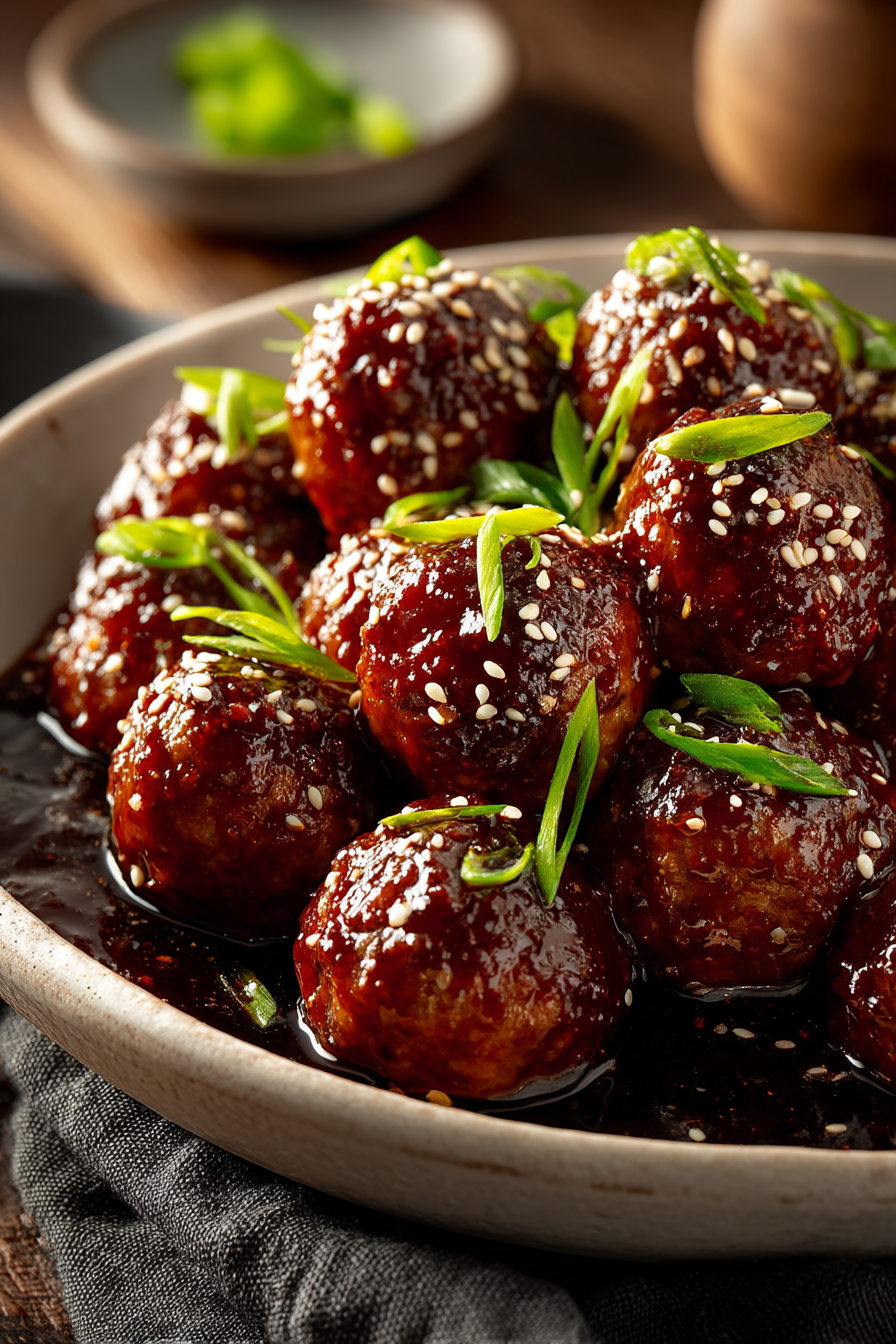
These sticky gochujang honey meatballs are sweet, spicy, savory, and packed with bold Korean-inspired flavor. Juicy beef and pork meatballs are baked until caramelized, then tossed in a glossy homemade gochujang honey glaze made with garlic, ginger, soy sauce, and sesame oil. The combination of rich umami flavor, balanced heat, and sticky glaze makes these Korean-style meatballs incredibly satisfying and perfect for weeknight dinners or party appetizers.
Serve these gochujang honey meatballs over steamed rice, garlic noodles, or tucked into crisp lettuce wraps for an easy restaurant-style meal at home. This easy Korean fusion recipe is perfect for meal prep and delivers the perfect balance of sweet heat, savory depth, and juicy meatball texture in every bite.
🍯 Why You’ll Love This Gochujang Honey Meatballs Recipe
Sweet, Spicy, and Savory
These gochujang honey meatballs have the perfect balance of sticky honey sweetness, bold gochujang heat, garlic, ginger, soy sauce, and rich umami flavor.
Juicy and Tender Meatballs
A simple panko, milk, and egg mixture keeps the beef and pork meatballs moist, tender, and flavorful instead of dry or dense.
Easy Weeknight Dinner
This Korean-inspired meatball recipe comes together in under 40 minutes, making it perfect for busy nights when you want something flavorful but simple.
Perfect Over Rice or Noodles
Serve these sticky gochujang meatballs over steamed rice, garlic noodles, fried rice, or in lettuce wraps for an easy restaurant-style meal at home.
Great for Meal Prep
The meatballs reheat well with a splash of water to loosen the glaze, making them a delicious option for lunches, dinners, and make-ahead rice bowls.
🌶️ Ingredient Notes for Gochujang Honey Meatballs
Gochujang
Gochujang is a Korean fermented chili paste that gives these meatballs their signature sweet, spicy, savory flavor. It adds rich umami depth and creates the glossy sticky glaze that makes this recipe so addictive.
Ground Beef and Ground Pork
Using a combination of ground beef and pork creates the best juicy meatball texture. The beef adds rich flavor while the pork keeps the meatballs tender and moist.
Honey
Honey balances the spice of the gochujang and helps create a beautifully sticky glaze that clings perfectly to the meatballs.
Panko Breadcrumbs
Panko breadcrumbs help keep the meatballs light and tender instead of dense. Combined with milk and egg, they create a panade that locks in moisture.
Fish Sauce
A small amount of fish sauce adds extra savory umami flavor without making the meatballs taste fishy. It deepens the overall Korean-inspired flavor profile.
Sesame Oil
Sesame oil adds warm nutty flavor and enhances the rich savory glaze. A small amount goes a long way.
Fresh Garlic and Ginger
Fresh garlic and ginger give the glaze bold aromatic flavor and help balance the sweetness of the honey and richness of the meat.
Rice Vinegar
Rice vinegar adds brightness and acidity that balances the sticky sweet glaze and keeps the flavor from becoming too heavy.
🍯 How to Make Gochujang Honey Meatballs
Prepare the Baking Sheet
Preheat the oven to 425°F. Line a baking sheet with parchment paper and lightly grease it so the gochujang honey meatballs brown evenly and release easily after baking.
Make the Meatball Panade
In a large mixing bowl, combine the panko breadcrumbs, whole milk, and egg. Let the mixture sit for about 2 minutes so the breadcrumbs soften. This helps create juicy, tender meatballs instead of dense ones.
Mix the Meatballs
Add the ground beef, ground pork, green onions, garlic, ginger, soy sauce, fish sauce, sesame oil, kosher salt, and black pepper to the bowl. Mix gently until just combined, being careful not to overwork the meat.
Shape the Meatballs
Roll the mixture into about 20 evenly sized meatballs, about 1 1/2 tablespoons each. Place them on the prepared baking sheet with a little space between each meatball so they can brown properly.
Bake Until Juicy and Browned
Bake the meatballs for 16 to 18 minutes, or until they are browned and cooked through. The internal temperature should reach 165°F. For extra caramelization, broil them for 1 to 2 minutes at the end.
Make the Gochujang Honey Glaze
While the meatballs bake, combine the gochujang, honey, brown sugar, soy sauce, rice vinegar, sesame oil, neutral oil or butter, garlic, ginger, and water in a small saucepan. Simmer gently over medium-low heat for 4 to 5 minutes until glossy and slightly thickened.
Thicken the Glaze if Desired
For a thicker restaurant-style glaze, whisk the cornstarch with cold water in a small bowl. Stir it into the simmering gochujang honey sauce and cook for 20 to 30 seconds until shiny and thickened.
Coat and Serve
Add the hot baked meatballs directly to the gochujang honey glaze and toss gently until evenly coated. Let them rest for 1 minute so the sticky sauce clings to the meatballs, then garnish with toasted sesame seeds, sliced green onions, and optional Korean chili flakes.
🔥 Pro Tips for the Best Gochujang Honey Meatballs
Use Fresh Ginger and Garlic
Freshly grated ginger and freshly minced garlic give these gochujang honey meatballs the boldest flavor and help create a more authentic Korean-inspired glaze.
Don’t Overmix the Meat
Mix the meatball mixture gently until just combined. Overmixing can make the meatballs dense and tough instead of tender and juicy.
Use 80/20 Ground Beef
Ground beef with a little fat creates the best texture and flavor. Lean beef can make the meatballs dry after baking.
Let the Panade Soak Properly
Allowing the panko breadcrumbs, milk, and egg to sit for a few minutes helps keep the meatballs soft and moist while baking.
Broil for Extra Caramelization
Broiling the meatballs for 1 to 2 minutes after baking creates deeper browning and adds extra flavor that pairs perfectly with the sticky gochujang honey glaze.
Simmer the Sauce Gently
A gentle simmer helps the glaze thicken properly without becoming overly salty or reducing too quickly. Avoid boiling the sauce aggressively.
Toss the Meatballs While Hot
Coating the meatballs immediately after baking helps the glossy gochujang honey glaze cling better and absorb into the surface.
Adjust the Spice Level
For spicier Korean meatballs, add extra gochujang or Korean chili flakes. For a milder version, slightly reduce the gochujang and add a little extra honey.
Serve Immediately for the Best Texture
These sticky Korean-inspired meatballs taste best fresh while the glaze is glossy and the meatballs are hot and juicy.
🌶️ Variations for Gochujang Honey Meatballs
Extra Spicy Gochujang Meatballs
Add extra gochujang, Korean chili flakes, or a spoonful of chili crisp to the glaze for a hotter version with bold sweet-spicy flavor.
Turkey Gochujang Meatballs
Swap the beef and pork for ground turkey for a lighter version. Add 1 extra tablespoon of milk to keep the turkey meatballs moist and tender.
Chicken Gochujang Meatballs
Use ground chicken instead of beef and pork for a leaner Korean-inspired meatball recipe. Avoid overbaking, since chicken can dry out quickly.
Gochujang Honey Meatball Rice Bowls
Serve the sticky gochujang honey meatballs over steamed rice with cucumbers, kimchi, shredded carrots, sesame seeds, and extra green onions for an easy rice bowl dinner.
Gochujang Meatball Lettuce Wraps
Tuck the glazed meatballs into crisp butter lettuce or romaine leaves with pickled vegetables, cucumber, and sesame seeds for a fresh, lighter serving option.
Party Appetizer Meatballs
Make smaller cocktail-size meatballs and serve them with toothpicks for a sweet, spicy, and savory appetizer perfect for parties, holidays, and game day.
Noodle Bowl Version
Serve these Korean-inspired meatballs over garlic noodles, ramen noodles, or udon with extra glaze for a hearty sweet-spicy noodle bowl.
🧊 Storage and Make Ahead Tips for Gochujang Honey Meatballs
How to Store Leftover Meatballs
Store leftover gochujang honey meatballs in an airtight container in the refrigerator for up to 4 days. The sticky glaze will continue developing flavor as it sits.
How to Reheat
Reheat the meatballs gently in a skillet over low heat or in the microwave. Add a small splash of water to loosen the glaze and keep the meatballs moist.
Freeze for Longer Storage
For the best texture, freeze the baked meatballs before tossing them in the gochujang honey glaze. Store in a freezer-safe container for up to 2 months.
How to Thaw Frozen Meatballs
Thaw the meatballs overnight in the refrigerator before reheating and coating them with freshly made glaze.
Make Ahead Instructions
You can prepare the meatball mixture up to 1 day in advance and keep it covered in the refrigerator until ready to bake.
Prep the Sauce Ahead of Time
The gochujang honey glaze can also be made ahead and refrigerated for up to 4 days. Reheat gently before tossing with the meatballs.
Best Texture Tip
For the glossiest sticky glaze and juiciest texture, toss the meatballs in the sauce right before serving instead of storing them fully glazed for long periods.
❓ Gochujang Honey Meatballs FAQ
What do gochujang honey meatballs taste like?
Gochujang honey meatballs taste sweet, spicy, savory, and slightly smoky with deep umami flavor from gochujang, soy sauce, garlic, ginger, and a sticky honey glaze.
Are gochujang honey meatballs spicy?
These meatballs have a medium spice level. For milder meatballs, reduce the gochujang slightly and add a little extra honey. For more heat, add Korean chili flakes or chili crisp.
Can I make these meatballs ahead of time?
Yes, you can prepare the meatball mixture up to 1 day in advance and store it covered in the refrigerator. You can also bake the meatballs ahead and toss them with the gochujang honey glaze right before serving.
Can I use ground turkey or chicken?
Yes, ground turkey or chicken can be used for a lighter version. Add an extra tablespoon of milk to help keep the meatballs tender, and avoid overbaking because lean poultry dries out faster.
What should I serve with gochujang honey meatballs?
Serve gochujang honey meatballs over steamed rice, garlic noodles, fried rice, or in lettuce wraps. They also pair well with kimchi, Korean cucumber salad, pickled radishes, and sesame vegetables.
Can I freeze gochujang honey meatballs?
Yes, for the best texture, freeze the baked meatballs without the glaze for up to 2 months. Thaw overnight in the refrigerator, reheat gently, and toss with freshly warmed gochujang honey sauce.
How do I keep meatballs tender?
Use a panko, milk, and egg panade, avoid overmixing the meat, and use ground beef with some fat. These steps help keep the meatballs juicy and tender after baking.
Can I make the glaze thicker?
Yes, simmer the glaze until it lightly coats the back of a spoon. For an extra glossy restaurant-style sauce, stir in a cornstarch slurry made with cornstarch and cold water.

🍯🌶️ Gochujang Honey Meatballs
Equipment
- Large mixing bowl
- Baking sheet
- Parchment paper
- Small saucepan
- Whisk
- Measuring cups and spoons
- cookie scoop or tablespoon
- meat thermometer
- Silicone spatula or tongs
- Knife and cutting board
Ingredients
Meatballs
- 1 pound ground beef 80/20
- 1/2 pound ground pork
- 1 large egg
- 1/2 cup panko breadcrumbs
- 3 tablespoons whole milk
- 3 green onions finely sliced
- 3 cloves garlic finely minced
- 1 teaspoon freshly grated ginger
- 1 tablespoon soy sauce
- 3/4 teaspoon fish sauce
- 1/2 teaspoon sesame oil
- 3/4 teaspoon kosher salt
- 1/2 teaspoon black pepper
Gochujang Honey Glaze
- 3 tablespoons gochujang
- 2 tablespoons honey
- 1 tablespoon brown sugar
- 2 tablespoons soy sauce
- 1 tablespoon rice vinegar
- 1/2 teaspoon sesame oil
- 1 teaspoon neutral oil or unsalted butter
- 2 cloves garlic finely minced
- 1 teaspoon freshly grated ginger
- 3 tablespoons water
Optional Glossy Finish
- 1 teaspoon cornstarch
- 1 tablespoon cold water
Garnish
- Toasted sesame seeds
- Sliced green onions
- Optional Korean chili flakes
Instructions
Step 1: Preheat Oven
- Preheat oven to 425°F.
- Line a baking sheet with parchment paper and lightly grease.
Step 2: Prepare the Panade
- In a large mixing bowl combine the panko breadcrumbs, milk, and egg.
- Let sit for 2 minutes to soften the breadcrumbs.
Step 3: Mix the Meatballs
- Add the ground beef, ground pork, green onions, garlic, ginger, soy sauce, fish sauce, sesame oil, kosher salt, and black pepper.
- Mix gently until just combined. Do not overmix.
Step 4: Shape the Meatballs
- Roll mixture into about 20 meatballs, approximately 1 1/2 tablespoons each.
- Arrange evenly spaced on the prepared baking sheet.
Step 5: Bake
- Bake for 16–18 minutes or until browned and cooked through.
- Internal temperature should reach 165°F.
- For extra caramelization, broil for 1–2 minutes at the end.
Step 6: Make the Glaze
- While the meatballs bake, combine the gochujang, honey, brown sugar, soy sauce, rice vinegar, sesame oil, neutral oil or butter, garlic, ginger, and water in a small saucepan.
- Simmer over medium-low heat for 4–5 minutes until glossy and lightly thickened.
Step 7: Optional Thickener
- For a thicker restaurant-style glaze, whisk together the cornstarch and cold water.
- Stir into the simmering sauce and cook for 20–30 seconds until glossy.
Step 8: Coat the Meatballs
- Add hot baked meatballs directly into the glaze and toss gently until evenly coated.
- Let rest 1 minute before serving.
- Garnish with toasted sesame seeds, green onions, and optional Korean chili flakes.
Notes
🌶️ More Delicious Meatball Recipes to Try
If you love these sticky gochujang honey meatballs, here are more flavorful meatball recipes packed with sweet, savory, spicy, and comforting flavors.
- Beef Rendang Meatballs – Rich, slow-cooked Indonesian-inspired meatballs with bold spices and deep savory flavor.
- Maple Apple Sage Pork Meatballs – Sweet and savory pork meatballs with cozy maple, apple, and sage flavor.
- Thai Sweet Chili Meatballs – Sticky sweet chili glazed meatballs with bold Thai-inspired flavor and gentle heat.
- Sweet and Sour Meatballs – Classic sweet and tangy meatballs coated in a glossy homemade sauce.
- Garlic Parmesan Chicken Meatball Subs – Juicy chicken meatballs loaded into toasted rolls with garlic butter and parmesan flavor.
Leave a Reply