
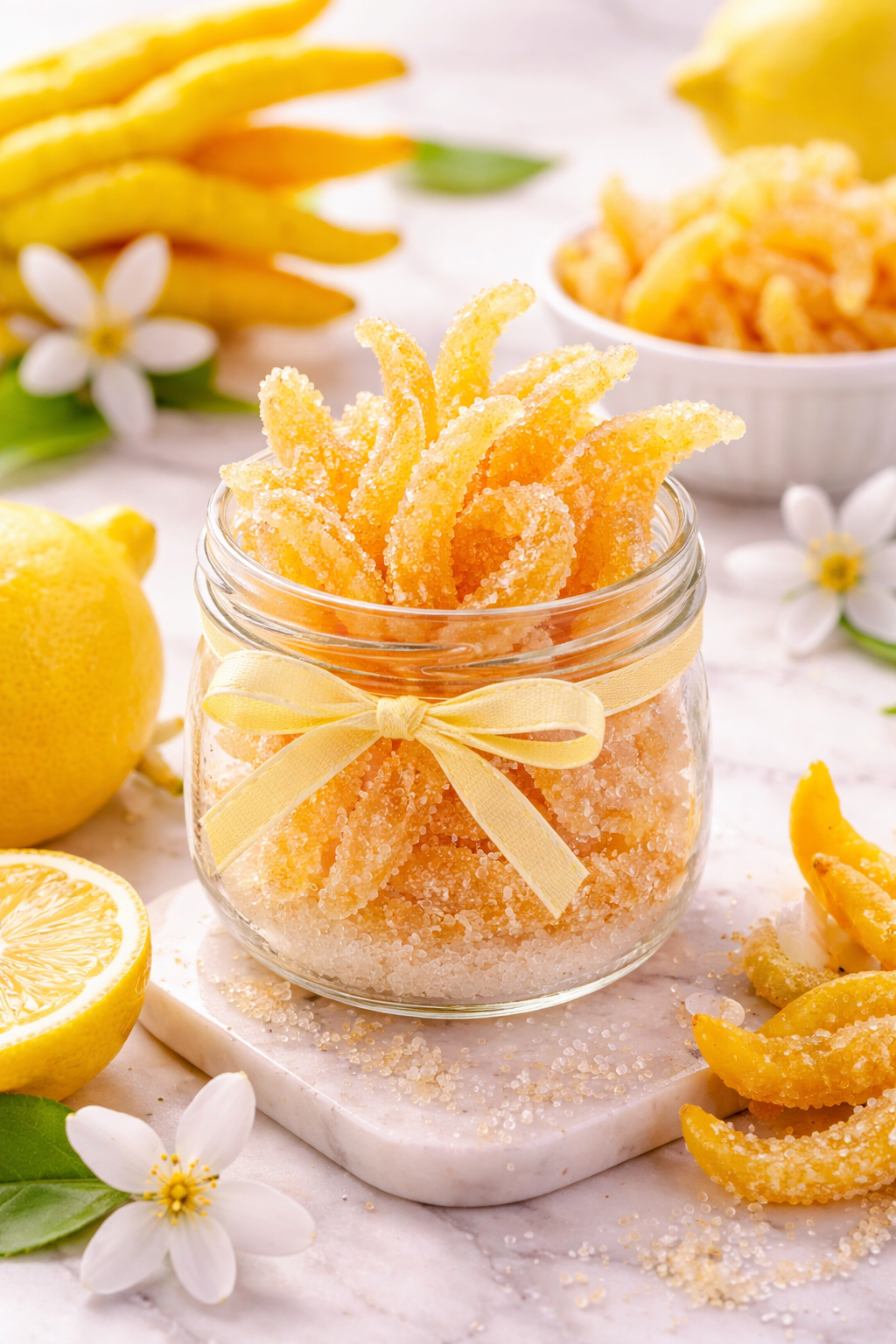
Buddha’s hand may look like something out of a fairytale, but this fragrant citrus is one of the most magical ingredients you can bring into your kitchen. Unlike lemons or oranges, it has no juice and no sharp bite—just a soft, floral aroma that transforms beautifully when slowly candied. These jewel-like slices are perfect for gifting, decorating desserts, or enjoying straight from the jar, and once you try them, you’ll understand why this rare citrus has been treasured for centuries.

Candied Buddha’s Hand
Equipment
- Sharp knife
- Cutting board
- Medium saucepan
- slotted spoon
- Cooling rack or parchment-lined baking sheet
- measuring cups
- Airtight container or glass jar for storage
Ingredients
- 1 large Buddha’s hand
- 2 cups granulated sugar divided
- 2 cups water
- 1 teaspoon vanilla extract optional
Instructions
Prepare the Buddha’s Hand
- Wash thoroughly. Separate the fingers and slice into ¼-inch pieces. Remove any tough inner pith if present (Buddha’s hand has little to no bitterness).
Blanch to Soften
- Place slices in a saucepan and cover with water. Bring to a boil, simmer 5 minutes, then drain.
- Repeat once more to ensure tenderness.
Make the Syrup
- Return slices to the saucepan. Add 2 cups sugar and 2 cups water. Bring to a gentle simmer.
Candy the Citrus
- Simmer uncovered for 45–60 minutes, stirring occasionally, until the slices turn translucent and the syrup thickens slightly.
Cool & Dry
- Remove slices with a slotted spoon and place on a rack or parchment. Let dry 30–60 minutes until slightly tacky.
Optional Sugar Coating
- Toss cooled pieces in the remaining ½ cup sugar for a sparkling finish.
Notes
- Choose a fresh Buddha’s hand: Look for bright yellow fruit with firm, fragrant fingers and no soft spots for the best aroma.
- Blanching matters: Blanching twice softens the peel and ensures a tender texture without bitterness.
- Slice evenly: Uniform slices candy more evenly and create a consistent, translucent finish.
- Control sweetness: Skip the final sugar coating if you prefer a glossy, less-sweet candied peel.
- Save the syrup: The leftover citrus syrup is highly fragrant—use it in tea, cocktails, lemonade, frostings, or to brush onto cakes.
- Texture tips: Simmer longer for chewier pieces; shorten slightly for softer, jelly-like candy.
- Storage tip: Keep candied pieces fully cooled before storing to prevent sticking or excess moisture.
Frequently Asked Questions
Can I eat candied Buddha’s hand on its own?
Yes! Candied Buddha’s hand is meant to be enjoyed like candy. It’s lightly sweet, floral, and aromatic, with a pleasantly chewy texture.
Does Buddha’s hand need to be peeled before candying?
No peeling is required. The entire fruit is made up of fragrant peel and pith, which is exactly what you want for candying.
Is candied Buddha’s hand bitter?
When properly blanched and simmered, it is not bitter at all. The result is gently sweet with a perfumed citrus flavor.
Can I use candied Buddha’s hand as a substitute for candied orange or lemon peel?
Yes, but expect a softer, more floral citrus note rather than a sharp or tangy flavor.
What desserts pair best with candied Buddha’s hand?
It pairs beautifully with shortbread, olive oil cake, cheesecakes, panna cotta, scones, and buttercreams.
More Recipes from Sugar Cloud Baking
Oreo Tres Leches Cake
https://sugarcloudbaking.com/2026/01/22/oreo-tres-leches-cake-cookies-cream-milk-cake/
Watermelon Creamsicle Cheesecake Bars
https://sugarcloudbaking.com/2026/01/22/watermelon-creamsicle-cheesecake-bars/
Blackberry Brie Grilled Cheese
https://sugarcloudbaking.com/2025/12/25/blackberry-brie-grilled-cheese/
Roasted Tomato Eggplant Boursin Grilled Cheese
https://sugarcloudbaking.com/2026/01/18/roasted-tomato-eggplant-boursin-grilled-cheese/
Spicy Bacon Gouda Grilled Cheese
https://sugarcloudbaking.com/2025/12/02/spicy-bacon-gouda-grilled-cheese/
Leave a Reply