
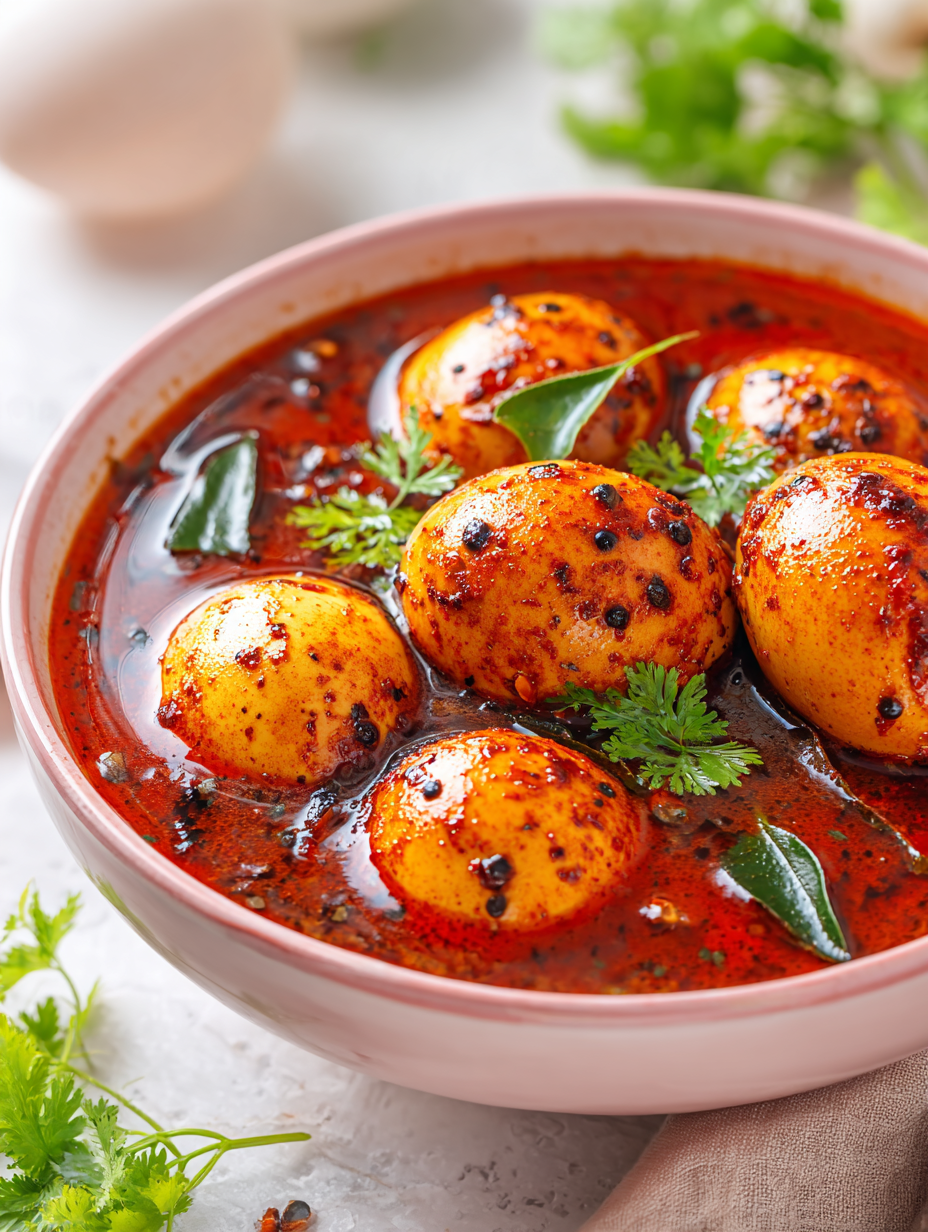
This comforting egg curry brings together crackling mustard seeds, fragrant cumin, and a gently spiced tomato-onion gravy that clings to every bite. Simple pantry ingredients transform humble boiled eggs into a deeply satisfying curry that’s perfect for busy weeknights yet special enough to serve with rice or flatbreads for a full Indian-style meal.

🍛 Indian Egg Curry (Anda Curry with Mustard & Cumin)
Equipment
- Saucepan or deep skillet
- Small pot (for boiling eggs)
- slotted spoon
- Cutting board
- Sharp knife
- Mixing bowl (optional, for eggs)
- Measuring spoons
- Wooden spoon or spatula
- Lid (for simmering)
Ingredients
Eggs
- 6 large eggs hard-boiled, peeled
- 1 tsp oil
- Pinch of salt
- Pinch of turmeric optional, for color
Tempering (tadka)
- 2 tbsp oil vegetable, mustard, or sunflower
- 1 tsp whole black mustard seeds
- 1 tsp whole cumin seeds
- 8–10 fresh curry leaves optional
Gravy
- 1 large onion finely chopped
- 1 tbsp ginger-garlic paste
- ½ tsp turmeric powder
- 1–1½ tsp red chili powder adjust to taste
- 1½ tsp coriander powder
- 1-2 medium tomatoes finely chopped or puréed
- Salt to taste
- ¾-1 cup water for desired consistency
Finish
- ¾–1 tsp garam masala
- 2 tbsp chopped fresh cilantro
- ½ tsp kasuri methi optional
- Squeeze of lemon juice optional
Instructions
Prep the eggs (optional but recommended)
- Heat 1 tsp oil in a pan. Lightly sauté the boiled eggs with a pinch of salt and turmeric until lightly blistered. Remove and set aside.
Temper the spices
- Heat 2 tbsp oil in a deep pan over medium heat. Add mustard seeds; let them splutter. Add cumin seeds and curry leaves (if using) and sauté for a few seconds until fragrant.
Build the base
- Add chopped onion and sauté until golden. Stir in ginger-garlic paste and cook until the raw smell disappears.
Spice it
- Add turmeric, chili powder, coriander powder, and salt. Stir for 20–30 seconds, then add tomatoes. Cook until the oil separates and the masala thickens.
Simmer
- Add water to reach your preferred gravy thickness. Bring to a gentle simmer.
Add eggs & finish
- Gently add the eggs and simmer 5–7 minutes so they absorb the flavors. Sprinkle garam masala and kasuri methi (if using). Turn off heat.
Garnish & serve
- Finish with cilantro and a squeeze of lemon (optional).
Notes
✨ Tips & Variations
- South Indian vibe: Use coconut oil and don’t skip curry leaves.
- Creamy: Stir in 2–3 tbsp coconut milk at the end.
- Extra heat: Add a slit green chili with the onions.
- Deeper color: A pinch of Kashmiri chili powder adds color without much heat.
🌶️ Serving Suggestions
- Serve with steamed basmati rice, jeera rice, chapati, or naan
- A side of cucumber raita balances the heat beautifully
📝 Recipe Notes – Egg Curry with Mustard & Cumin
- Egg prep matters: Lightly sautéing or shallow-frying the boiled eggs before adding them to the curry helps them hold their shape and absorb flavor better, but this step can be skipped if you prefer a softer texture.
- Mustard seeds: Use whole black mustard seeds, not ground. Let them fully splutter in hot oil before adding anything else to avoid bitterness.
- Cumin timing: Add cumin seeds right after mustard seeds—if added too early they can burn, too late and they won’t bloom properly.
- Onion color: Cook onions until golden, not pale. This builds depth and prevents a raw onion taste in the finished curry.
- Tomato moisture: Cook tomatoes until the oil separates from the masala. If the curry tastes sour, the tomatoes need more cooking time.
- Spice control: Adjust chili powder based on heat tolerance. Kashmiri chili powder adds color with less heat.
- Garam masala: Always add garam masala at the end of cooking to preserve aroma and prevent bitterness.
- Curry leaves: Optional but highly recommended. Add them during tempering for the most fragrance.
- Consistency: Add water gradually. Egg curry should be medium-thick, not watery, so it coats rice or bread well.
- Resting time: Let the curry rest 10–15 minutes before serving. The flavor improves noticeably as the eggs soak up the gravy.
- Storage: Keeps well in the refrigerator for 2–3 days. Reheat gently to avoid overcooking the eggs.
- Serving tip: Tastes even better the next day and pairs especially well with plain rice or chapati.
❓ Frequently Asked Questions
Can I make egg curry ahead of time?
Yes. Egg curry actually tastes better after a few hours as the flavors deepen. Store it in the refrigerator and reheat gently on the stove.
Do I need tomatoes for egg curry?
Tomatoes create the classic tangy gravy, but you can substitute canned crushed tomatoes or a small amount of tomato paste diluted with water.
Is this egg curry very spicy?
No, it’s moderately spiced. You can easily adjust the heat by reducing chili powder or adding a splash of cream or coconut milk.
Can I use ground mustard instead of whole mustard seeds?
Whole mustard seeds are recommended for authentic flavor and aroma. Ground mustard will change the taste and texture significantly.
What can I serve with egg curry besides rice?
Egg curry pairs well with chapati, roti, naan, paratha, or even plain toast for a quick meal.
Can I freeze egg curry?
Freezing is not ideal. Eggs can become rubbery after freezing and thawing. Refrigeration is a better option.
Is this recipe gluten-free?
Yes, the curry itself is naturally gluten-free. Just be mindful of what you serve it with.
How can I make it richer without dairy?
Stir in a few tablespoons of coconut milk or cashew cream at the end for a richer, dairy-free curry.
🍽️ More Cozy Indian Curry Recipes You’ll Love
- Lamb Gongura Curry
https://sugarcloudbaking.com/2026/01/11/lamb-gongura-curry/ - Red Spicy Veg Manchurian
https://sugarcloudbaking.com/2025/11/23/red-spicy-veg-manchurian/ - Indian Potato Patty Sandwich
https://sugarcloudbaking.com/2025/12/04/indian-potato-patty-sandwich-recipe/ - Tandoori Masala Chicken Burger
https://sugarcloudbaking.com/2025/11/21/tandoori-masala-chicken-burger/
Leave a Reply